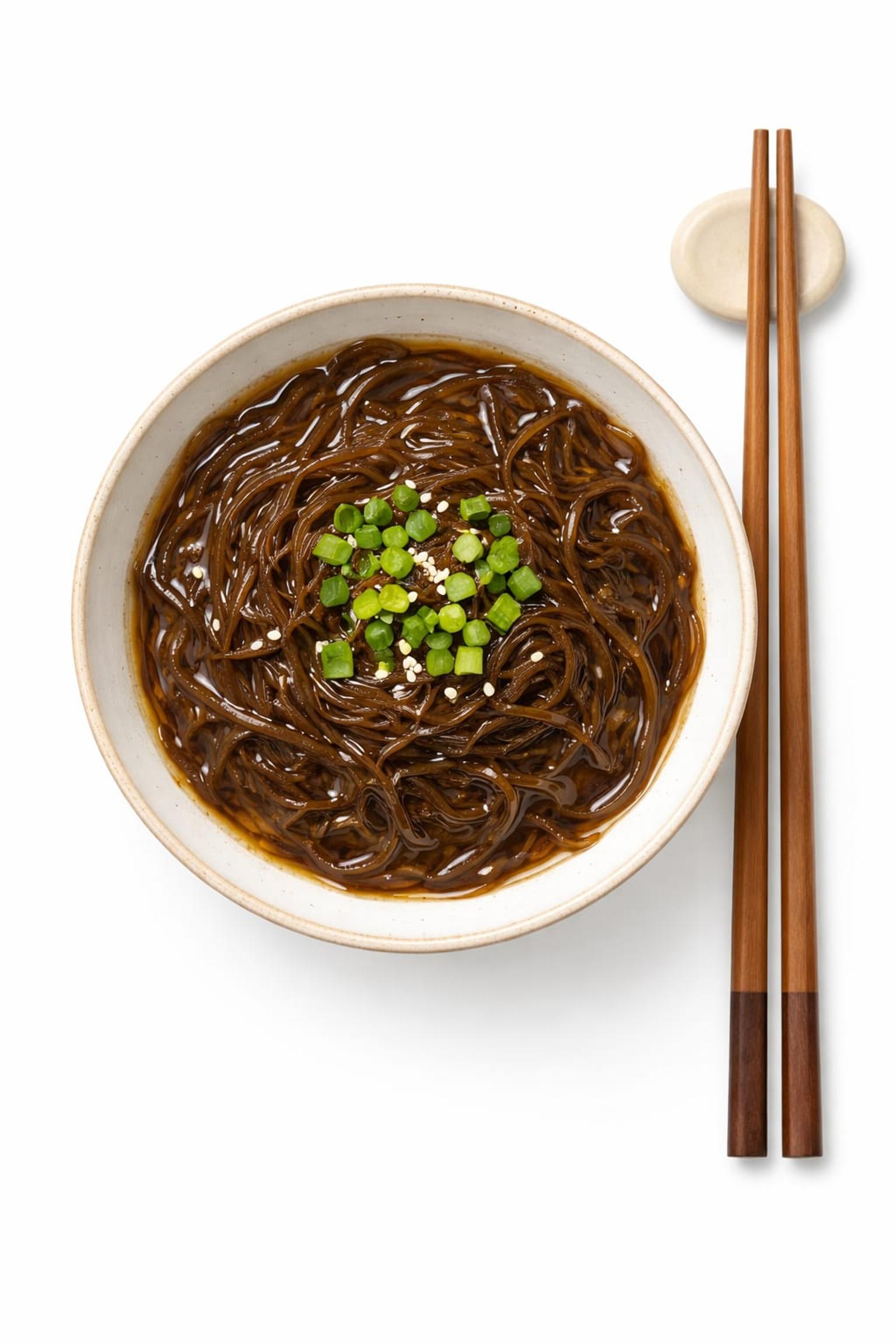
How to Buy Mozuku in Europe: Best Formats and Buyer Checks
A practical guide to buying mozuku in Europe: which forms are available, what labels to check, and how to choose between whole seaweed and extract.
By Not Nori · · 11 min read
Informational content based on the sources cited in the article. It does not replace medical advice.

On this page
- What Europeans Can Realistically Buy Today
- 1. Frozen or seasoned mozuku
- 2. Dried mozuku
- 3. Salted or plain preserved mozuku
- 4. Fucoidan extract or capsules
- Which Format Makes Sense For Your Goal
- The Europe Legal Question, In Plain Buyer Language
- What To Check Before You Pay
- 1. The species name
- 2. The origin claim
- 3. The form and ingredient list
- 4. The EU operator and label basics
- 5. The lot-level trust signals
- 6. The texture clue
- 7. The use-case match
- Where To Look, Without Guessing
- Japanese grocery stores and online Japanese grocers
- Specialty import e-commerce
- Supplement retailers
- One practical rule
- Frequently Asked Questions
- Where can I buy mozuku in Europe right now?
- Can I buy fresh mozuku in Europe?
- What is the best mozuku format for a first purchase?
- Is mozuku the same as a fucoidan supplement?
- What should I check on a mozuku product page before buying?
- Is wakame an easier substitute if I cannot find mozuku?
- Buyer Verdict
- Sources
- Official and primary sources
- Market examples, checked April 9, 2026
If you are buying mozuku in Europe, start with the format, not the shop. Mozuku is sold as a food, a pantry ingredient, or a fucoidan supplement, and each one needs a different buying check.
Public listings checked on April 9, 2026 showed that mozuku was available in Europe, but the market was still patchy. Examples included a frozen 150 g mozuku pack sold by WASO France, a 250 g Okinawa mozuku listing at Umami Paris, and a 20 g dried Okinawan mozuku listing at Japanese Taste. Mozuku is available, just not reliably enough to treat it like a standard supermarket staple.
If you are new to the species, start with What Is Mozuku Seaweed? A Clear Guide. This article focuses on the buying decision: what formats you can realistically find in Europe, where each format makes sense, and what to verify before you pay.
What Europeans Can Realistically Buy Today
In Europe, mozuku usually appears in four buying forms: frozen or seasoned, dried, salted or simply preserved, and fucoidan extract or capsules. Fresh mozuku is the least realistic format.
1. Frozen or seasoned mozuku
This is the closest thing to the ready-to-eat Okinawan experience. Current European Japanese-grocery listings include frozen packs that are already seasoned for vinegared dishes.
Best for:
- trying mozuku as a food, not as a capsule,
- learning whether you actually like the texture,
- serving it cold, often as mozuku-su or another vinegared side dish.
Main tradeoff:
- many packs are not plain seaweed, they can include vinegar, sweeteners, soy sauce, or flavor enhancers,
- storage follows the usual frozen-food logic, not shelf-stable pantry use.
2. Dried mozuku
Dried mozuku is easier to ship, easier to store, and closer to a pantry ingredient than a frozen prepared dish.
Best for:
- buyers outside big Japanese-grocery cities,
- lighter shipping,
- people who want an ingredient they can rehydrate and season themselves.
Main tradeoff:
- drying changes the workflow and sometimes the texture,
- the product is practical, but less plug-and-play than a ready-to-eat cup or frozen pack.
3. Salted or plain preserved mozuku
This is the form many serious whole-food buyers would prefer because the ingredient list can be simpler than a seasoned retail pack.
Best for:
- buyers who want more control over rinsing, seasoning, and final use,
- home cooks who want the closest thing to a base ingredient.
Main tradeoff:
- it is harder to find consistently in Europe than more consumer-ready formats,
- it usually needs rinsing or desalting before serving.
4. Fucoidan extract or capsules
This is a different purchase category. You are no longer buying mozuku as food in the culinary sense. You are buying a processed extract or supplement.
Best for:
- buyers whose main goal is standardized fucoidan intake,
- people who do not care whether the product feels like an Okinawan food experience.
Main tradeoff:
- supplement compliance, label quality, and testing become more important than culinary form,
- the product should not be marketed or evaluated as if it were the same thing as eating mozuku as a food.
Which Format Makes Sense For Your Goal
Choosing mozuku gets easier once you stop treating every listing as the same product.
| If your goal is... | The most logical format | Why |
|---|---|---|
| Taste authentic mozuku for the first time | Frozen or seasoned pack | Closest to the ready-to-eat Okinawan side-dish experience |
| Keep mozuku in the pantry | Dried mozuku | Better shelf stability and easier shipping |
| Control the ingredient list | Salted or plain preserved mozuku | Less reliance on pre-made seasoning |
| Target standardized fucoidan intake | Extract or capsule | The decision becomes supplement-focused, not culinary |
| Compare mozuku with easier EU retail options | Wakame or nori as a reference, not a replacement | Easier to source, but not equivalent for fucoidan or texture |
If you are mainly deciding between whole mozuku and extract, our guide on fucoidan dosage and how to take it covers the supplement side in more depth. If your question is really about food formats, fresh vs dried mozuku breaks down texture, storage, and why salted mozuku often sits between the two. If you are comparing substitute seaweeds, mozuku vs wakame explains why wakame is easier to find in Europe, but not the same purchase.
The Europe Legal Question, In Plain Buyer Language
For European buyers, the legal question is not decorative. It changes what kind of confidence a product page deserves.
Under Regulation (EU) 2015/2283, foods without significant EU consumption before 15 May 1997 can require pre-market authorization as Novel Foods. For whole mozuku sold as a food, that means you should not assume Europe-wide market status just because the species is widely eaten in Japan. The Article 14 route for traditional foods from third countries exists, but it still requires a formal EU process and a documented history of safe use.
The same caution applies to extracts. As of April 9, 2026, the European Commission's public novel-food materials still show fucoidan extract from Cladosiphon okamuranus in the application summaries. Buyers should therefore ask for the exact legal basis of the product being sold, rather than assuming a blanket EU authorization from the ingredient name alone.
That is why the safest buyer posture is simple:
- do not assume whole mozuku is a routine EU retail category,
- do not assume a mozuku extract is automatically authorized just because a safety opinion or application exists,
- ask what legal basis the seller is relying on for the exact product form being sold.
If you want the deep legal version, see Novel Food and Seaweed in the EU: What the 2025 Rules Mean. If you specifically want the traditional-food route, this Article 14 guide breaks down the process.
What To Check Before You Pay
A mozuku listing can look convincing long before it becomes verifiable. The strongest buyer signal is a stack of small proofs that agree with one another.
1. The species name
A serious listing should identify the species, ideally Cladosiphon okamuranus for Okinawa mozuku. "Brown seaweed" is not enough. Neither is "mozuku" without any scientific name if the product is being sold on authenticity. If you need the species split itself, Okinawa mozuku vs ito-mozuku explains what futo, ito, and hoso change in practice.
That precision is not academic. In 2023, Okinawa accounted for 20,084 tonnes of mozuku out of Japan's 20,174-tonne total, roughly 99.6% of the national supply.
2. The origin claim
If the product says Okinawa, the claim should be specific enough to be meaningful. "Japan" is weaker than "Okinawa." "Made in Japan" is weaker than "grown in Okinawa." If you care about provenance, read how to verify Okinawa origin before you buy.
3. The form and ingredient list
A frozen seasoned pack, a dried ingredient, and a fucoidan capsule are not substitutes. Read the ingredient list closely.
Look for:
- added vinegar or sweeteners,
- soy sauce or kelp seasoning,
- humectants or other processing aids,
- whether the product is plain seaweed or a prepared side dish.
4. The EU operator and label basics
If a food is being sold to European consumers, the listing should not feel anonymous. At minimum, the product should have a named operator, a clear ingredient list, net quantity, and storage instructions that make sense for the format.
5. The lot-level trust signals
For supplements and high-trust whole-food purchases, batch documentation matters. Ask for:
- a batch code,
- a current COA when relevant,
- testing for iodine and heavy metals,
- clarification on arsenic speciation when seaweed safety is a central selling point.
Our guide on how to read a batch-specific COA covers the analytical side.
6. The texture clue
Mozuku should be slippery and slightly gel-like. That is normal. But it should not feel gritty or dirty. Okinawa fisheries materials discuss cleaning and foreign-matter removal as real quality issues, which means texture and cleanliness are valid buyer checks, not just aesthetic preferences.
7. The use-case match
A 20 g dried pouch is not the same purchase as a 150 g frozen vinegared side dish. Before comparing prices, ask what the product is designed to do:
- snack or side dish,
- ingredient for home preparation,
- long-shelf-life pantry item,
- supplement routine.
Where To Look, Without Guessing
Start with Japanese grocers if you want mozuku as food. Move to import shops if you want dried product. Use supplement retailers only if fucoidan is the real target.
Japanese grocery stores and online Japanese grocers
This is where ready-to-eat or frozen formats are most likely to appear. The advantage is that you are more likely to find mozuku sold as food, close to how people actually use it in Japan.
Specialty import e-commerce
This channel is especially relevant for dried mozuku. It makes geographic sense because dried products travel more easily and do not need the same cold-chain commitment as frozen packs.
Supplement retailers
This is the most common route if your real target is fucoidan, not a culinary mozuku product. That can be a rational choice, but it is a different category with different checks. Start with our seaweed supplement buying guide for Europe before treating any capsule as self-explanatory.
One practical rule
If your main goal is to eat mozuku as food, start by looking at Japanese-grocery channels. If your main goal is a standardized fucoidan routine, evaluate it as a supplement purchase and do not confuse the two.
Frequently Asked Questions
Where can I buy mozuku in Europe right now?
Usually through Japanese grocery stores, online Japanese grocers serving Europe, specialty import shops, or supplement retailers. Public listings checked on April 9, 2026 showed frozen, seasoned, and dried mozuku options, but availability was still fragmented rather than universal.
Can I buy fresh mozuku in Europe?
It is the least realistic format. Most European buyers are far more likely to find frozen, seasoned, dried, or salted products than truly fresh mozuku.
What is the best mozuku format for a first purchase?
For most people, a frozen or seasoned ready-to-eat pack is the easiest first test because it shows the texture and usual serving style quickly. If your main constraint is storage and shipping, dried mozuku is more practical.
Is mozuku the same as a fucoidan supplement?
No. Mozuku is a food. A fucoidan supplement is a processed extract or standardized capsule. They can come from the same species, but they are different purchases with different label questions.
What should I check on a mozuku product page before buying?
The species name, the origin claim, the format, the ingredient list, the named operator, and any batch or testing documents that support the safety and authenticity story.
Is wakame an easier substitute if I cannot find mozuku?
Wakame is easier to find in Europe, but it is not the same product. The taste, texture, and fucoidan profile differ. Mozuku vs wakame covers the comparison.
Buyer Verdict
- Buy frozen or seasoned mozuku if you want the closest food experience
- Buy dried mozuku if shelf life and shipping matter most
- Buy extract only if you are shopping for fucoidan, not for cuisine
- Skip any listing that hides the species, origin, form, or legal basis
Sources
Official and primary sources
- Regulation (EU) 2015/2283 on novel foods
- EFSA, 2022: Dietary exposure to heavy metals and iodine intake via consumption of seaweeds and halophytes in the European population
- Commission Recommendation (EU) 2018/464 on monitoring metals and iodine in seaweed
- Commission Regulation (EU) 2023/915 on contaminants in food
- European Commission, summary of applications and notifications for novel foods
- European Commission, public summary dossier for fucoidan extract from Cladosiphon okamuranus
- Okinawa Prefecture, major fishery products
- Okinawa Prefecture, species introduction for Okinawa mozuku
- MAFF, Okinawa local dish using mozuku
- MAFF, export case study on dried mozuku
- OIST, Okinawa Mozuku: The Treasure Under the Sea
Market examples, checked April 9, 2026
- WASO France: Mozuku Seaweed 150g (frozen) by Daiei Foods
- Umami Paris: Algue Mozuku d'Okinawa 250g
- Japanese Taste: Dried Okinawan Mozuku Seaweed 20g
This article is for information only. It is not legal or medical advice. If you have a thyroid condition or use seaweed supplements regularly, assess iodine exposure with a qualified professional.