Seaweed Supplements in Europe: Safety Rules and Lab Checks
Learn what EU rules on Novel Food, contaminants and lab testing actually require before a seaweed supplement can be sold in Europe.
By Not Nori · · 17 min read
Informational content based on the sources cited in the article. It does not replace medical advice.
On this page
- What the EU Novel Food Regulation Actually Says
- The Real Contaminant Risk: Species and Source Matter More Than "Natural"
- Iodine: the species-specific risk most brands ignore
- Arsenic: organic vs. inorganic (a distinction most labels skip)
- What Certifications Actually Guarantee (and Which Ones Do Not)
- ISO 17025: accreditation for the testing laboratory, not the product
- GMP: useful, but only if the scheme is named
- HACCP: hazard analysis at the production level
- "Organic": relevant for pesticides, irrelevant for heavy metals
- The COA: what it must contain to mean anything
- The Article 14 Path: Why Traditional Use Requires a Formal Dossier
- What has been evaluated, and what buyers should not assume
- A Practical Checklist Before You Buy Any Seaweed Supplement
- What the Science Says About Fucoidan Safety: Levels of Evidence
- FAQ
- Key Takeaways
In Europe, not all seaweed supplements are equal under the law, and the gap between a rigorously tested product and one carrying genuine health risks can be invisible to the naked eye.
Here is a fact that surprises most people: in February 2024, the European Union added more than 20 algae species to its non-novel food catalogue, clearing the path for faster market access. Okinawa mozuku (Cladosiphon okamuranus), consumed in Japan for centuries at a rate of over 20,000 tonnes per year, was not among them. Centuries of traditional use in Japan are not, by themselves, sufficient to bypass EU pre-market authorization requirements.
That is not a regulatory failing. It is by design, and understanding the logic behind it is the first step toward buying seaweed supplements you can actually trust.
This guide covers what EU law requires, which contaminants matter and why, what certifications actually guarantee (and which ones do not), and how to evaluate any seaweed product before you buy.
What the EU Novel Food Regulation Actually Says
The EU Novel Food Regulation (EU) 2015/2283 defines a "novel food" as any food not consumed to a significant degree within the European Union before 15 May 1997. If a species was not part of the European diet at that cutoff date, selling it as food in the EU generally requires a documented pre-market route under the Novel Food framework.
This creates a clean division that most supplement buyers are never told about.
The Commission catalogue, a non-binding reference point: If a seaweed or algae species has documented traditional use in any EU member state before 1997, it can appear in the European Commission's non-novel food catalogue. That catalogue helps operators and authorities assess non-novel status, but it is not a stand-alone market authorization and does not remove the need for case-by-case compliance with other EU food rules. Species like Undaria pinnatifida (wakame), certain Porphyra species (nori), and Fucus vesiculosus are commonly treated through that lens.
The Novel Food authorization path: Species without EU pre-1997 consumption history require a formal dossier submitted to EFSA (European Food Safety Authority). EFSA evaluates safety data, compositional data, proposed conditions of use, and the history of consumption. If EFSA concludes the product is safe, the Commission can authorize it for specific uses. This process typically takes three to four years and costs the applicant hundreds of thousands of euros.
The Article 14 "traditional food" notification: A faster-track option exists for foods with a documented history of safe use for at least 25 years in a country outside the EU. The applicant notifies the Commission, which verifies validity and then forwards the valid notification to EFSA and EU member states. If no duly reasoned safety objection is raised within the four-month objection window, the Commission can authorise the food and update the Union list. For whole mozuku as a conventional food, this can be a plausible route, but only if the full notification is accepted and no safety objections block the process.
Key fact: In February 2024, the EU updated its non-novel food catalogue to include more than 20 new algae species, bringing the total to over 60 entries. The catalogue is a reference point for non-novel status assessments, not a stand-alone authorization route. Mozuku (Cladosiphon okamuranus) was not listed in that update because significant EU consumption before 1997 had not been demonstrated.
The practical implication for buyers: if a seaweed food is not backed by a clear non-novel status assessment, a Novel Food authorisation, or another documented legal basis, treat its EU food-market status as unresolved and ask the seller for the exact basis before buying. The supplement market can move faster than enforcement, making independent verification essential.
The Real Contaminant Risk: Species and Source Matter More Than "Natural"
The primary safety concern with seaweed supplements is not the seaweed itself, it is what the seaweed absorbs from its growing environment. Seaweed is a bioaccumulator: it concentrates compounds, both beneficial and harmful, from the surrounding water column.
The EU addressed this directly with Regulation (EU) 2023/915, which replaced the earlier framework of Regulation (EC) 1881/2006. For seaweed-based food supplements, the regulation sets maximum levels of:
- Lead and cadmium: 3.0 mg/kg each
- Mercury: 0.1 mg/kg
- Nickel: 30 mg/kg (40 mg/kg for wakame), enforceable from July 2025
These are not conservative margins. Seaweeds grown in polluted coastal waters, a real risk for unverified imports, can exceed these limits significantly. A January 2024 RASFF alert (EU Rapid Alert System for Food and Feed) notified by Italian authorities flagged a dried seaweed product with an iodine content of 24,141 mg/kg, more than twelve times the French national limit of 2,000 mg/kg. The product was withdrawn from the market across multiple member states.
Iodine: the species-specific risk most brands ignore
Iodine is where species selection matters most, and where the difference between seaweeds is most dramatic.
| Species | Approximate iodine content |
|---|---|
| Kombu (kelp, Saccharina japonica) | ~2,353 µg/g |
| Wakame (Undaria pinnatifida) | ~42 µg/g |
| Nori (Porphyra spp.) | ~16 µg/g |
| Mozuku (Cladosiphon okamuranus) | ~1.4 µg/g |
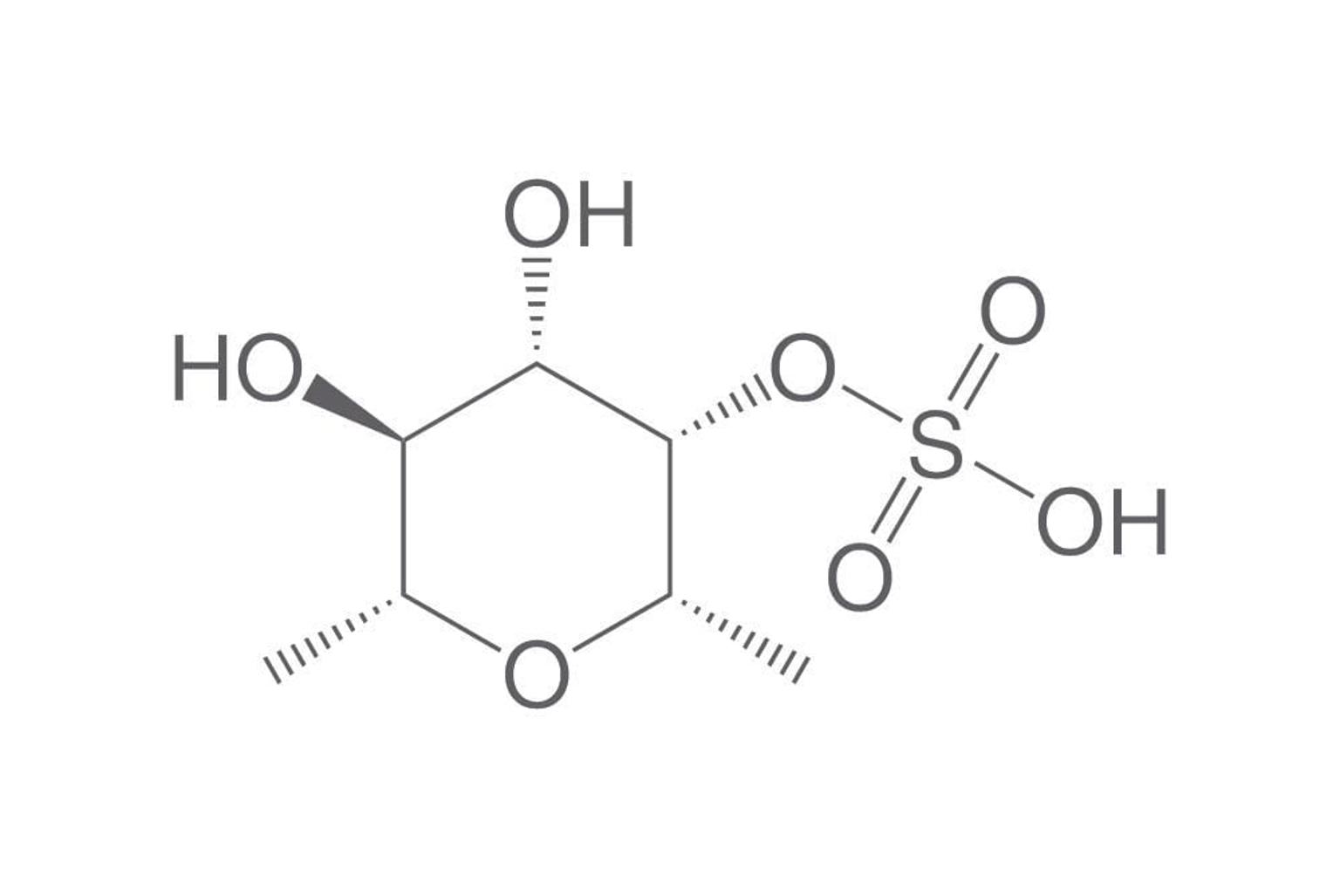
Mozuku contains approximately 1.4 micrograms of iodine per gram, roughly 1,680 times less than kombu kelp. The EFSA upper tolerable intake level for iodine in adults is 600 µg per day. A 50-gram serving of fresh mozuku delivers approximately 70 µg, well within safe parameters. The same quantity of kombu could deliver a dose approaching 200 times the adult upper limit.
This is not an argument against other seaweeds. It is an argument for transparency about which seaweed is actually in the product you are buying.
Arsenic: organic vs. inorganic (a distinction most labels skip)
Seaweeds can also accumulate arsenic, but the toxicological picture is more nuanced than a single number suggests. Arsenic in seaweed is predominantly in organic forms (arsenosugars, arsenobetaine), which have significantly lower bioavailability and toxicity than inorganic arsenic, the form regulated for drinking water and rice. The EU is updating its arsenic framework for seaweed under Regulation 2023/915 precisely because this distinction matters.
A supplier who reports "total arsenic" without specifying the inorganic fraction is either uninformed or choosing not to inform you. A quality Certificate of Analysis will separate both.
What Certifications Actually Guarantee (and Which Ones Do Not)
Four terms appear constantly in seaweed supplement marketing: ISO 17025, GMP, HACCP, and "organic." Here is what each one actually means.
ISO 17025: accreditation for the testing laboratory, not the product
ISO 17025 is the international standard for testing and calibration laboratories. When a supplier says their product was "tested at an ISO 17025 accredited lab" (SGS, Eurofins, Intertek), it means the laboratory's methodology has been independently validated, instruments calibrated, analysts qualified, results reproducible and legally defensible.
ISO 17025 says nothing about the product itself. It says the measurement was done correctly. This matters precisely because it means the number on the COA is reliable.
GMP: useful, but only if the scheme is named
Good Manufacturing Practice is one of the most useful acronyms in supplement quality, and one of the easiest to oversimplify. In practice, GMP may refer to different public or private frameworks depending on the market. In the US dietary supplement sector, the clearest legal example is FDA's cGMP rule in 21 CFR Part 111. In the EU food market, the hard legal baseline comes from food hygiene law and HACCP-based procedures, with private GMP schemes often layered on top.
The practical buyer takeaway is straightforward: GMP only becomes a strong signal when the supplier can name the exact scheme, the certified facility, and the scope covered. GMP does not guarantee the raw material is safe. It tells you something about manufacturing discipline, not everything about the batch in your hand.
HACCP: hazard analysis at the production level
Hazard Analysis and Critical Control Points is a systematic approach to identifying and controlling food safety hazards. Under EU food law (Regulation (EC) 852/2004), food business operators generally must apply procedures based on HACCP principles, subject to limited exemptions and adaptations. It is a baseline compliance requirement, not a quality differentiator, but a necessary minimum.
"Organic": relevant for pesticides, irrelevant for heavy metals
Organic certification attests to production without synthetic pesticides and restricted inputs. It says nothing about heavy metal content, because heavy metal accumulation in seaweed depends on the mineral composition of the surrounding seawater, not on farming inputs. Seaweed grown organically in contaminated coastal waters can still exceed heavy metal limits.
The COA: what it must contain to mean anything
A Certificate of Analysis is a document issued by a third-party accredited laboratory confirming the composition and purity of a specific batch of product. For a seaweed supplement worth trusting, a COA should include:
- Identity verification: the species by scientific name, not common name
- Active content: fucoidan percentage if sold as a fucoidan supplement
- Heavy metals: lead, cadmium, mercury, arsenic (total and inorganic fraction separately)
- Iodine level
- Microbiological criteria: total viable count, absence of Salmonella and E. coli
- Batch number and date of analysis
The large majority of seaweed supplement brands operating online do not make their COAs publicly accessible. A brand that refuses to share a COA on request is a brand you should not buy from.
The Article 14 Path: Why Traditional Use Requires a Formal Dossier
For whole mozuku to be sold as a conventional food in Europe, not as a supplement ingredient but as the food itself, the Article 14 "traditional food from third country" procedure can be one plausible regulatory pathway.
Under Article 14 of Regulation (EU) 2015/2283, an operator must demonstrate:
- Continuous consumption of the food for at least 25 years in the customary diet of a significant population in a non-EU country
- A safety record based on compositional data and the history of that use
- No reasoned safety objections from EFSA or EU member states within a four-month review window
For mozuku, the evidence base is substantial. Aquaculture of Cladosiphon okamuranus in Okinawa has been documented and practiced since the 1970s. Official 2023 fisheries data put Okinawa output at 20,084 tonnes out of Japan's 20,174-tonne total, roughly 99.6% of national production. Okinawa residents consume mozuku as a regular dietary staple. A 2019 biomarker study of 396 Japanese volunteers found urinary fucoidan concentrations significantly higher in Okinawa participants than in other prefectures, directly confirming dietary absorption across the population.
The Article 14 notification process, from submission through EFSA consultation to Commission decision, typically takes 18 to 24 months. It is not fast. But the pathway is well-defined, the science behind mozuku's safety profile is solid, and the process is designed to be navigable for foods with documented histories of safe consumption.
What has been evaluated, and what buyers should not assume
Distinct from whole-food authorization, fucoidan extract from Cladosiphon okamuranus has been evaluated by EFSA and found not to raise a safety concern under the proposed conditions of use, up to 1,770 mg per day in food supplements. The application was submitted by H. Holstein GmbH & Co. KG, and the toxicological package included standard contaminant and tolerance work.
That is scientifically relevant, but buyers should separate a positive safety evaluation from final market status. As of April 9, 2026, the European Commission's public novel-food materials still show fucoidan extract from Cladosiphon okamuranus in the application summaries. A serious buyer should therefore ask a supplier to identify the exact legal basis for the product sold, rather than assuming that every mozuku-derived fucoidan capsule is automatically authorized across the EU.
To understand what fucoidan is and what the evidence actually shows, we have covered the science in a separate guide, with study citations and explicit level-of-evidence markers for each finding.
A Practical Checklist Before You Buy Any Seaweed Supplement
1. Is the species named by scientific name? "Brown seaweed blend" tells you nothing useful. A trustworthy product names the species: Cladosiphon okamuranus, Undaria pinnatifida, Fucus vesiculosus. If a brand cannot tell you exactly what seaweed is in the capsule, it is reasonable to assume they do not know.
2. Is the product's regulatory status clear? Is the species listed in the EU non-novel food catalogue? If not, what documented legal basis is the supplier relying on: a Novel Food authorization, an Article 14 route in progress, or another defensible status assessment? This should be available from the supplier on request and cross-checkable against EU public materials.
3. Is a batch-specific COA available? Not a generic certificate, a document linked to the lot number of what you are buying, showing heavy metals (including inorganic arsenic), iodine, and active content. If the brand does not publish COAs or will not share them on request, do not buy.
4. Was the testing done by an ISO 17025 accredited laboratory? SGS, Eurofins, and Intertek are internationally accredited and recognized by EU regulators. A COA from an in-house quality team is not equivalent.
5. Is the geographic origin specified to at least the country level? Okinawa, Japan, not "Asia." Ha'apai, Tonga, not "Pacific." The origin determines the growing conditions, which directly affects the contaminant risk profile. Traceability to the source cooperative or farm is the highest standard.
Red flags: "seaweed blend" without species names, no COA available on request, organic certification presented as the only quality credential, no EU address for the business operator, iodine content not disclosed.
What the Science Says About Fucoidan Safety: Levels of Evidence
Given the regulatory attention on seaweed contaminants, it is worth being equally rigorous about what science actually shows for fucoidan safety specifically.
Strongly supported (human and regulatory data): EFSA's assessment of fucoidan extract from Cladosiphon okamuranus concluded it is safe at up to 1,770 mg/day in food supplements, based on compositional data, the history of human consumption in Okinawa, and existing toxicological studies. No significant adverse effects were observed at 600 mg/kg body weight in animal studies.
Emerging evidence (human trials, limited sample sizes): A 2019 biomarker study of 396 Japanese volunteers confirmed dietary fucoidan absorption in the Okinawan population, showing significantly elevated urinary fucoidan levels compared to other regions. Multiple human clinical trials have investigated fucoidan's anti-inflammatory and immunomodulatory effects, with promising signals, though most studies involve small cohorts and short durations.
In vitro only (not applicable to human use without further evidence): The most dramatic findings on fucoidan, oncology applications, antiviral mechanisms, come primarily from cell culture studies. These findings are scientifically significant for research but cannot be extrapolated to clinical outcomes in humans without controlled trials.
This is the honest state of the evidence. Understanding what mozuku is and why it matters provides the biological context behind these findings.
FAQ
Is mozuku legal to buy and eat in Europe? Consuming mozuku is not illegal. The regulation applies to the commercial act of placing it on the EU market as a food product: businesses selling whole mozuku as food require the appropriate authorization. For fucoidan extract from Cladosiphon okamuranus, buyers should verify the exact legal basis of the marketed product rather than assuming blanket authorization from the ingredient name alone.
Do I need a Novel Food authorization to sell any seaweed in Europe? No. Species on the EU non-novel food catalogue, those traditionally consumed in Europe before May 1997, can be sold without prior authorization. The February 2024 catalogue update added more than 20 species, bringing the total to over 60. Mozuku is not on the catalogue.
What heavy metals are most concerning in seaweed supplements? Lead and cadmium are the primary regulated contaminants, both capped at 3.0 mg/kg in seaweed food supplements under Regulation (EU) 2023/915. Mercury (0.1 mg/kg) and nickel (30 mg/kg, from July 2025) are also subject to limits. For arsenic, always request reporting of the inorganic fraction, not just total arsenic.
How do I know if my fucoidan supplement is properly tested? Request the batch-specific Certificate of Analysis. It should cover lead, cadmium, mercury, inorganic arsenic, iodine, and fucoidan content, tested by an ISO 17025 accredited laboratory. If the brand cannot provide this document for the specific lot you purchased, that is a significant quality concern.
Why does mozuku have so much less iodine than kelp? Iodine accumulation in seaweed is species-specific and reflects the plant's biology and growing environment. Cladosiphon okamuranus accumulates approximately 1.4 µg of iodine per gram, compared to roughly 2,353 µg/g in kombu. This difference is physiological: kombu evolved to concentrate iodine; mozuku did not. This makes mozuku one of the lowest-iodine brown seaweeds available, particularly relevant for people with thyroid conditions or monitoring daily iodine intake.
What is the practical difference between "food supplement" and "food" for seaweed regulation? A food supplement containing fucoidan extract from Cladosiphon okamuranus is governed by supplement legislation and, where applicable, any valid Novel Food basis attached to that specific ingredient and format. Selling mozuku as a food, an ingredient in a packaged product, a seasoning, or a ready-to-eat item, remains a separate question for the whole food itself. The same species can move through different legal routes depending on whether the marketed product is a whole food or a processed extract.
Key Takeaways
- Whole mozuku sold as food in Europe needs a documented legal basis under the Novel Food framework. That status should not be assumed from Japanese consumption alone
- Fucoidan extract from Cladosiphon okamuranus has a public EFSA safety track at up to 1,770 mg/day, but buyers should still verify the exact EU legal basis of the marketed product
- Regulation (EU) 2023/915 sets legally binding maximum levels for lead, cadmium, mercury, and nickel in seaweed supplements. Compliance is mandatory
- Mozuku contains roughly 1,680 times less iodine per gram than kombu kelp, a meaningful safety distinction for daily supplementation
- A batch-specific Certificate of Analysis from an ISO 17025 accredited laboratory is the only reliable verification tool for what you are buying
- "Organic" certification does not substitute for batch-level heavy metal and iodine testing
- The Article 14 "traditional food" pathway can be a plausible route for whole mozuku, but only after a complete notification and no duly reasoned safety objections
This content is for informational purposes only and does not constitute medical advice. Consult a healthcare professional before making dietary changes, particularly if you have a thyroid condition or are taking anticoagulant medication.