Mozuku vs Nori: Why Only One Contains Fucoidan
Mozuku and nori come from different seaweed families. Here is why that matters for fucoidan content, iodine and everyday use.
By Not Nori · · 12 min read
Informational content based on the sources cited in the article. It does not replace medical advice.
On this page
- What Is Mozuku? The Brown Alga Built Around Fucoidan
- What Is Nori? A Red Alga With Its Own Polysaccharide: Porphyran
- The Core Difference: Fucoidan Is Biochemically Impossible in Nori
- Two Kingdoms, Two Polysaccharide Families
- The Analogy That Makes It Click
- Fucoidan From Mozuku: What the Clinical Evidence Shows
- Strongly Supported
- Emerging Evidence
- Still Debated
- Nori's Real Nutritional Strengths: Just Not Fucoidan
- A Tale of Two Cultures: Condiment vs Functional Food
- Mozuku vs Nori: Side-by-Side Comparison
- FAQ
- Does nori have fucoidan?
- Is mozuku better than nori?
- Can I get fucoidan from nori sheets?
- What is a standard serving of each?
- Is mozuku fucoidan approved in the EU?
- The Bottom Line
"Eating nori for fucoidan is like eating spinach for omega-3s." Both are genuinely nutritious foods. But the compound you are looking for simply is not there, because the biology does not allow it.
This distinction matters more than most seaweed comparison articles acknowledge. A quick search for "does nori have fucoidan" returns at least one result claiming it does. That claim is incorrect. The reason it is incorrect is not a matter of dose or bioavailability. It is a matter of taxonomy. Nori is red algae. Mozuku is brown. Those two words sit on opposite branches of the tree of life, and each branch produces entirely different families of sulfated polysaccharides.
This article explains the science behind that difference, reviews what fucoidan from mozuku actually does in human studies, and gives nori its due credit for the nutrients it genuinely provides.
What Is Mozuku? The Brown Alga Built Around Fucoidan
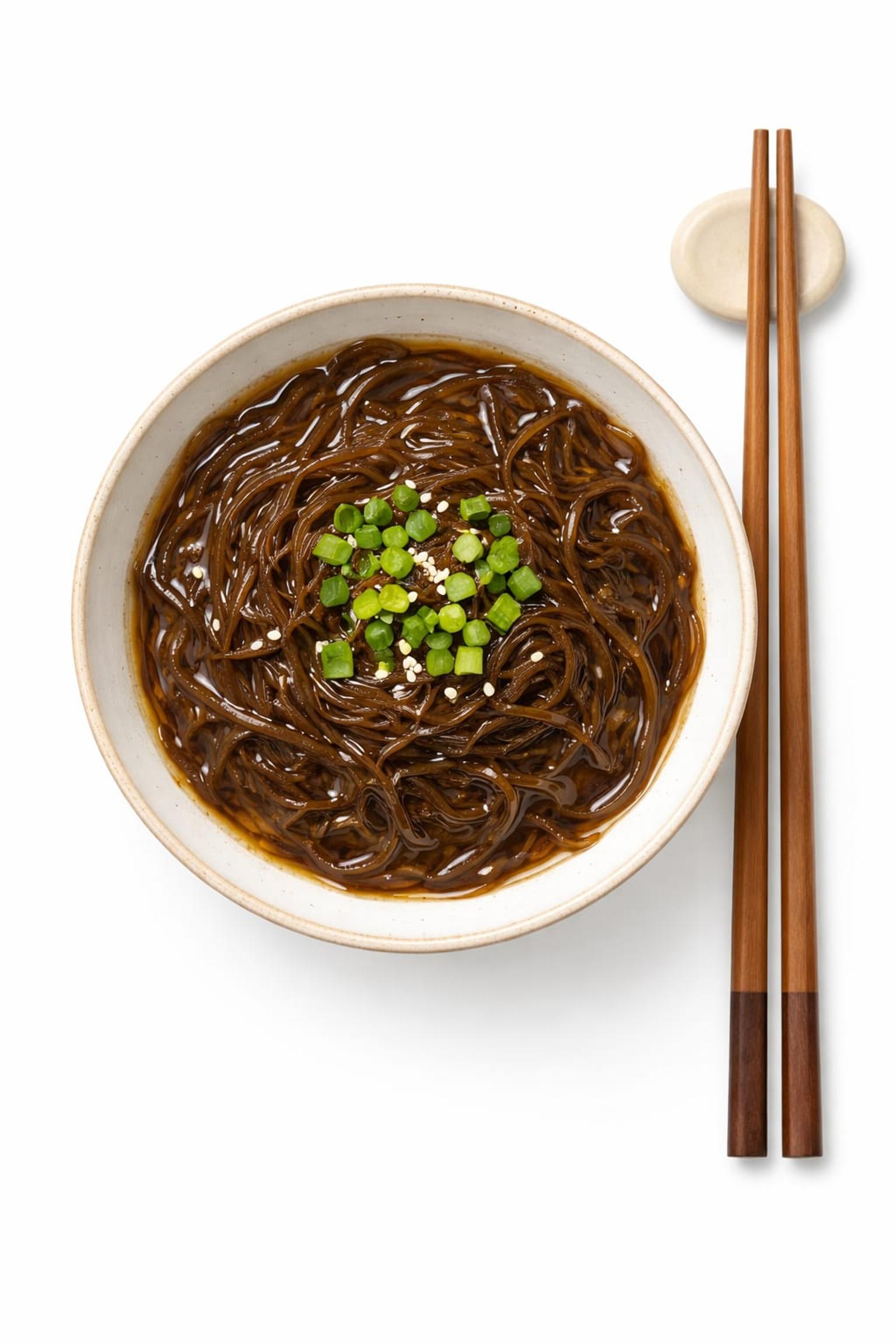
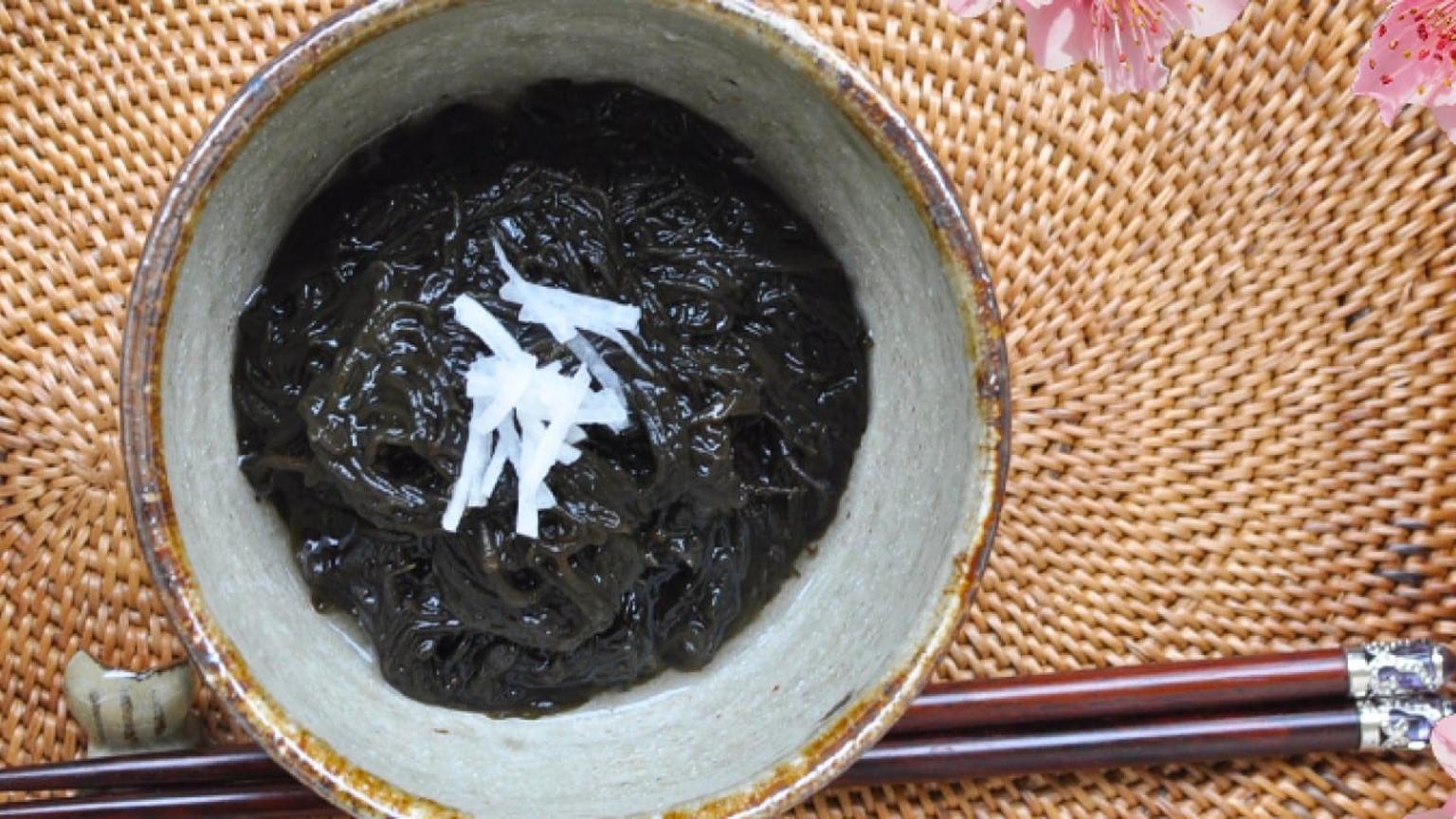
Mozuku (Cladosiphon okamuranus) is a slender, hair-like seaweed cultivated almost exclusively in the shallow subtropical waters of Okinawa, Japan. It belongs to the class Phaeophyceae, the brown algae, and has been a dietary staple in the Ryukyuan kingdom for centuries.
Key fact: Okinawa produces approximately 19,278 tonnes of mozuku per year, representing 97% of Japan's national output. (Ministry of Agriculture, Forestry and Fisheries, 2021)
What sets mozuku apart from a biochemical standpoint is its fucoidan content. Fucoidan is a class of sulfated fucose-rich polysaccharides found exclusively in the cell walls and intercellular matrix of brown algae. In Cladosiphon okamuranus, fucoidan constitutes 4 to 10% of the alga's dry weight across the entire plant, not concentrated in a single anatomical structure, but distributed throughout. This consistency is one reason mozuku became the species most frequently studied in human clinical trials involving fucoidan.
For a deeper introduction to the alga itself, see our what is mozuku complete guide.
What Is Nori? A Red Alga With Its Own Polysaccharide: Porphyran
Nori is the dried, pressed sheet of Pyropia yezoensis (formerly Porphyra yezoensis), a red alga belonging to the class Rhodophyceae. It has been cultivated along the Japanese coast since the Edo period (17th century), originally as a condiment and food wrapper. Today it is produced at industrial scale across Japan, Korea, and China.
Nori is genuinely nutritious. Its nutritional profile, per 100g dry weight, includes approximately 41.4g of protein, around 57.6µg of vitamin B12 (though bioavailability is disputed, as some of this may be in pseudovitamin B12 form), and approximately 2,100µg of iodine (MEXT Standard Tables of Food Composition in Japan, 2020). It is also a source of provitamin A, iron, and dietary fibre.
Nori's characteristic polysaccharide is porphyran, a sulfated galactan. Porphyran has its own emerging body of research, including some evidence of prebiotic and antioxidant activity. But porphyran is not fucoidan. Structurally, chemically, and functionally, these are distinct molecules.
The Core Difference: Fucoidan Is Biochemically Impossible in Nori
This is the section most comparison articles skip, or get wrong. The absence of fucoidan in nori is not a dosage question. It is not that nori has "less" fucoidan than mozuku. It is that nori contains none, because it cannot produce any.
Two Kingdoms, Two Polysaccharide Families
Brown algae (Phaeophyceae) and red algae (Rhodophyceae) are not closely related. They belong to entirely different kingdoms of the tree of life: brown algae are Stramenopiles (chromists), while red algae are Archaeplastida. The evolutionary distance between them is greater than the distance between land plants and fungi.
Each kingdom evolved distinct cell wall chemistry. Brown algae produce fucoidans, alginates, and laminarin. Red algae produce agars, carrageenans, and porphyrans. These are not interchangeable product families. They are the outputs of completely different biosynthetic pathways, laid down over hundreds of millions of years of separate evolution.
A 2011 structural analysis published in Marine Drugs (Ale et al.) established that fucoidan production is exclusive to the Phaeophyceae class, meaning no red alga produces fucoidan under any conditions. This is not a matter of variety, growing conditions, or processing. It is a biological constraint.
The Analogy That Makes It Click
Think of it this way. Olive oil contains oleic acid (a monounsaturated omega-9 fatty acid) in abundance. Flaxseed oil contains alpha-linolenic acid (an omega-3). If you want omega-3s, you reach for flaxseed. If someone tells you that olive oil is a source of omega-3s, they are describing the wrong molecule. The comparison is superficially reasonable (both are oils, both are healthy fats), but it is chemically incorrect.
Mozuku and nori are both seaweeds. Both are nutritious. But their core bioactive polysaccharides belong to entirely different structural families. Asking whether nori has fucoidan is like asking whether olive oil has omega-3s. The answer is: no, because the biology points elsewhere.
Fucoidan From Mozuku: What the Clinical Evidence Shows
For a comprehensive review of the full fucoidan evidence base, see our fucoidan complete guide. Here is a summary organised by level of evidence.
Strongly Supported
A 2015 systematic review published in Marine Drugs (Fitton et al.) examined the immunomodulatory properties of fucoidan from Cladosiphon okamuranus across multiple human and animal studies. The review found consistent evidence of immune activation effects, including modulation of natural killer cell activity and cytokine profiles.
A 1999 randomised controlled trial (Nagaoka et al.) tested whole mozuku consumption in patients with Helicobacter pylori-associated gastric ulcers. Researchers observed a 94% improvement rate in the treatment group, attributed in part to fucoidan's anti-adhesive effect on the bacterium. This remains one of the strongest human intervention studies involving whole mozuku.
Emerging Evidence
A 2019 observational study (Nagamine et al.) involving 396 Japanese volunteers found significantly higher urinary fucoidan concentrations in Okinawan participants compared to mainland Japanese, suggesting that habitual mozuku consumption results in measurable systemic fucoidan exposure. A companion study published in PMC (Nagamine et al., PMC6117716, 2018) confirmed that fucoidan from whole mozuku is bioavailable in humans, detectable in urine within hours of consumption.
Still Debated
Anti-cancer mechanisms have been explored in cell culture and animal models, with several studies showing fucoidan's ability to induce apoptosis in cancer cell lines. However, as of 2026, no human RCT has confirmed anti-tumour efficacy. These findings are preliminary and should not be interpreted as evidence that fucoidan treats cancer in humans.
Anti-coagulant activity is also frequently cited. Fucoidan shares structural similarities with heparin, a blood thinner, and this has raised questions about interactions with anticoagulant medications. The evidence is largely in vitro, but the precautionary note stands.
For dosage guidance and practical advice on how to incorporate mozuku fucoidan into your diet, see our fucoidan dosage guide.
Nori's Real Nutritional Strengths: Just Not Fucoidan
Nori does not need fucoidan to be a worthwhile food. Its legitimate strengths include:
Protein density. At roughly 41.4g of protein per 100g dry weight, nori has one of the highest protein-to-weight ratios of any whole food. In practice, a standard nori sheet weighs about 2 to 3 grams, so absolute protein intake per serving is modest. But for a condiment-scale food, the density is remarkable.
Iodine. Nori provides substantial iodine, approximately 2,100µg per 100g (MEXT, 2020). At 2 to 3g per sheet, a typical serving delivers 40 to 60µg, which contributes meaningfully to the adult RDA of 150µg without the risk of excess associated with higher-iodine seaweeds like kombu.
Provitamin A and iron. Nori contains beta-carotene and non-haem iron, relevant particularly for plant-based diets.
Porphyran. Nori's characteristic polysaccharide is an active area of research. Early studies suggest prebiotic and antioxidant properties, though human clinical evidence remains limited compared to fucoidan.
Nori is an excellent condiment and wrapper. It is not a fucoidan source. Those two facts coexist without contradiction.
A Tale of Two Cultures: Condiment vs Functional Food
The cultural role of each alga helps explain why the clinical evidence is so different in depth.
Nori entered mainstream Japanese cuisine during the Edo period (17th century), as a pressed, toasted sheet used to wrap rice balls and line sushi rolls. Standard serving sizes are 2 to 3 grams. It functions primarily as a flavour and texture element, not a standalone food. No major longevity study has cited nori as a dietary variable.
Mozuku has been a dietary staple in the Ryukyuan kingdom (present-day Okinawa) for centuries. It is eaten in portions of 80 to 150g, typically as a vinegared side dish called mozuku-su, and appears regularly in Okinawan school cafeteria menus. The Okinawa Centenarian Study, which investigated the dietary habits of the world's highest concentration of centenarians, identified mozuku as a regular component of the traditional Okinawan diet. Nori did not feature in that research.
Okinawa even celebrates Mozuku Day on the third Sunday of April.
The portion ratio between the two foods (2 to 3g for nori versus 80 to 150g for mozuku) represents a 26 to 50-fold difference in volume. That ratio reflects the difference in cultural function: nori wraps food, mozuku is the food.
For more context on how mozuku fits into the broader Okinawan dietary pattern, see our Okinawa diet guide.
Mozuku vs Nori: Side-by-Side Comparison
| Category | Mozuku (Cladosiphon okamuranus) | Nori (Pyropia yezoensis) |
|---|---|---|
| Algae class | Brown (Phaeophyceae) | Red (Rhodophyceae) |
| Key polysaccharide | Fucoidan | Porphyran |
| Fucoidan content | 4-10% dry weight | 0% (cannot produce fucoidan) |
| Protein (per 100g dry) | ~10g | ~41g |
| Iodine (per 100g dry) | Moderate | ~2,100µg |
| Vitamin B12 | Negligible | ~57.6µg (partial pseudovitamin) |
| Standard serving | 80-150g | 2-3g (1 sheet) |
| Culinary role | Functional food, side dish | Condiment, wrapper |
| Human clinical trials | Yes (fucoidan, mozuku-specific) | Limited (porphyran, emerging) |
| EU novel food status | Authorised (fucoidan, max 1,770mg/day) | Long-established food |
| Longevity research | Okinawa Centenarian Study | Not cited |
FAQ
Does nori have fucoidan?
No. Nori is a red alga belonging to the class Rhodophyceae. Fucoidan is produced exclusively by brown algae (Phaeophyceae). The two taxonomic groups evolved entirely different cell wall polysaccharides: brown algae produce fucoidans and alginates; red algae produce agars, carrageenans, and porphyrans. There is no condition under which nori produces fucoidan. Any source claiming otherwise is incorrect.
Is mozuku better than nori?
That question has no single answer, because the two foods serve different purposes. For fucoidan specifically, mozuku is the only relevant option. For high protein density, iodine, and use as a culinary wrapper or condiment, nori performs its role well. They are not substitutes for each other.
Can I get fucoidan from nori sheets?
No. See above. If you are looking for dietary fucoidan, the practical options are whole mozuku (available fresh or in vinegared pouches from Japanese grocery sources) or standardised mozuku fucoidan supplements. See our fucoidan dosage guide for specifics.
What is a standard serving of each?
A single nori sheet weighs approximately 2 to 3 grams. A standard serving of mozuku in Okinawa is 80 to 150 grams, eaten as a vinegared side dish. The difference in serving size reflects the difference in culinary function: nori is a condiment, mozuku is a substantive food.
Is mozuku fucoidan approved in the EU?
Do not assume so from the species name alone. Public EU materials show a positive safety track and an application history for Cladosiphon okamuranus extract, but buyers should verify the exact legal basis and Union-list status of the specific product being sold. For the regulatory context, see our EU novel food regulations article.
The Bottom Line
- Nori is red algae. Mozuku is brown. This single taxonomic fact means nori produces zero fucoidan.
- Fucoidan is exclusive to brown algae (Phaeophyceae), established by structural analysis across species (Ale et al., 2011).
- Nori's active polysaccharide is porphyran, a sulfated galactan with its own emerging evidence base but no established fucoidan-like effects.
- Mozuku fucoidan has the strongest human clinical evidence of any fucoidan source, including an RCT on H. pylori gastric ulcers and an observational study confirming bioavailability in regular consumers.
- Nori remains a valuable food for protein density, iodine, and culinary use. It is not a fucoidan source.
- Standard serving sizes differ by a factor of 26 to 50. Nori is consumed as a condiment. Mozuku is consumed as a food.
- If fucoidan is your target, mozuku is your only whole-food option. Nori, wakame, and kombu do not substitute.
This content is for informational purposes only and does not constitute medical advice. Consult a healthcare professional before making dietary changes.