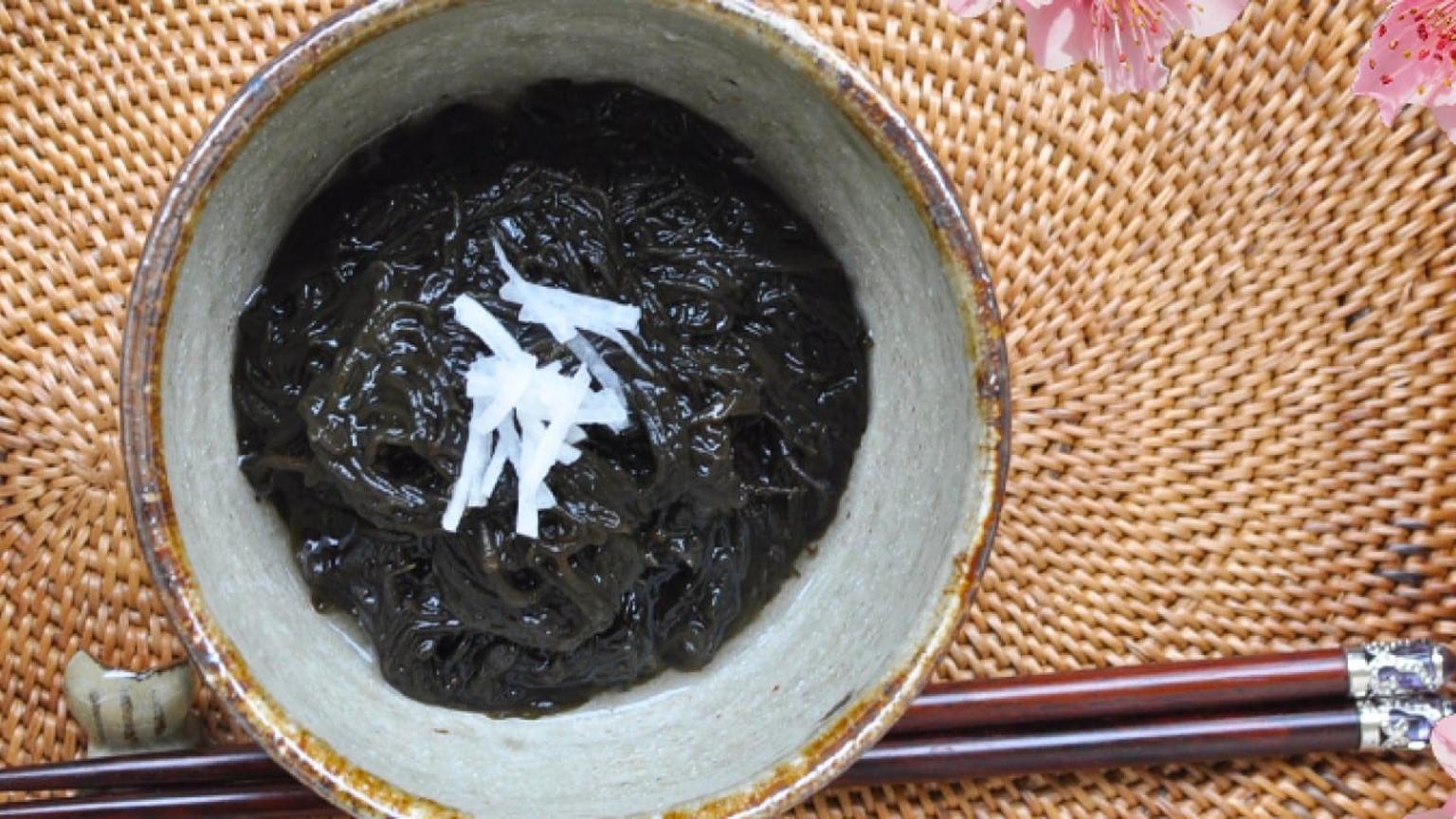
What Is Mozuku Seaweed? A Clear Guide
What mozuku is, how it is grown in Okinawa, what makes its texture distinctive and why fucoidan is so often discussed alongside it.
By Not Nori · · 18 min read
Informational content based on the sources cited in the article. It does not replace medical advice.
On this page
- What Mozuku Actually Is, and Why the Name Covers Two Very Different Seaweeds
- Futo-Mozuku vs. Ito-Mozuku: Why the Difference Matters for Science and Shopping
- Where Mozuku Comes From: A Modern Aquaculture Success Story, Not an Ancient Tradition
- Reef Ecology: What Mozuku Farms May Contribute
- Nutritional Profile: What You Are Actually Eating Per 100 Grams
- Fucoidan: Why the Sliminess Is the Point, Not a Defect
- What the Science Actually Says, An Honest Evidence Map
- Strongly Supported, What Analytical Chemistry Has Established
- Emerging Evidence, Bioavailability in Animal Models and Human Biomarker Data
- Still Debated, Okinawan Longevity and What Mozuku's Role Actually Is
- How Mozuku Is Eaten, From 100-Yen Convenience Store Staple to European Pantry
- Forms Available, Fresh, Salted, Dried, and Extract, and What That Means for Buyers Outside Japan
- Frequently Asked Questions
- What is mozuku seaweed and how is it different from other Japanese seaweeds?
- Is mozuku seaweed good for you?
- Where can I buy mozuku seaweed in Europe?
- What does mozuku taste like and how do you eat it?
- Can you eat mozuku seaweed if you have a thyroid condition?
- The Short Version,What You Need to Know About Mozuku Seaweed
In export and product language, mozuku usually points to Okinawa mozuku (Cladosiphon okamuranus), a brown seaweed cultivated almost exclusively in Okinawa, Japan. Official MAFF statistics for 2013 put Okinawa at more than 99% of Japan's national mozuku output, and other public Okinawa materials place annual production in the roughly 15,000 to 20,000 metric ton range depending on the year cited. In the analytical literature, what stands out is its high fucoidan content, often reported around 20 to 35% of dry weight, together with a species-specific fucoidan profile.
Here is what makes that framing interesting: in Okinawa, mozuku can often be found as an ordinary convenience food, including low-cost vinegared cups sold in refrigerated cases. It is not usually presented locally as a rare wellness artifact. The "rare superfood" framing is much stronger in export marketing than in everyday Okinawan food culture. Recognising that gap between local reality and international marketing is the best starting point for understanding what mozuku actually is, what it does, and what the science honestly supports.
If you want the wider topic map before going deeper, our mozuku hub groups the core guides, comparisons, and buyer-oriented articles in one place.
What Mozuku Actually Is, and Why the Name Covers Two Very Different Seaweeds
"Mozuku" is not a single species. In the Okinawa commercial context, the term mainly covers two taxonomically distinct seaweeds that differ in morphology, sulfated polysaccharide structure, fucoidan content, and market position. Both belong to the class Phaeophyceae (brown algae) and the family Chordariaceae, but they are not interchangeable, and research conducted on one cannot be assumed to apply to the other.
The two species are Cladosiphon okamuranus (known in Japan as futo-mozuku, or "thick mozuku") and Nemacystus decipiens (ito-mozuku, or "thread mozuku"). Futo-mozuku is the dominant Okinawan species and the one most relevant to fucoidan research. Official Okinawa sources and later genomics work show that ito-mozuku is also cultivated in Okinawa, but at a much smaller scale.
It is also worth being precise about where mozuku sits in the broader seaweed taxonomy. Mozuku is a brown alga in a different family from wakame (Undaria pinnatifida, family Alariaceae) or konbu (Saccharina japonica, family Laminariaceae). These distinctions matter because bioactive compounds in seaweeds are family- and species-specific: what holds for one does not transfer to another.
| Species | Common name | Texture | Fucoidan content (DW) | Primary market |
|---|---|---|---|---|
| Cladosiphon okamuranus | Futo-mozuku / thick mozuku | Rope-like, 1–2 mm diameter | 20–35% | Okinawa, export |
| Nemacystus decipiens | Ito-mozuku / thread mozuku | Hair-thin filaments | Lower; less studied | Okinawa niche |
Futo-Mozuku vs. Ito-Mozuku: Why the Difference Matters for Science and Shopping
The visual difference is immediately apparent. Futo-mozuku forms thick, rope-like strands roughly 1–2 mm in diameter; ito-mozuku is delicate, almost hair-thin. In terms of flavour, futo-mozuku is slightly more robust and mucilaginous; ito-mozuku is more delicate and subtle.
If you want the buyer-focused version of this distinction rather than the broad species primer, our Okinawa mozuku vs ito-mozuku comparison breaks down what the species name changes in practice.
The more consequential difference is molecular. The fucoidan in C. okamuranus has a homofucan backbone with (1→3) and (1→4) glycosidic linkages, sulfated at C-2 and C-4 positions. This structural arrangement is specific to this species and is not found in Undaria pinnatifida (wakame) or Fucus vesiculosus (bladderwrack), both of which are more common in European supplement markets. The implication is direct: clinical or mechanistic findings from studies using wakame fucoidan or bladderwrack fucoidan cannot be directly extrapolated to mozuku, and vice versa. When you read a fucoidan study, identifying the source species is the first thing to check.
Where Mozuku Comes From: A Modern Aquaculture Success Story, Not an Ancient Tradition
Commercial mozuku cultivation was not an ancient tradition preserved through centuries of Ryukyuan food culture. It was deliberately engineered. Okinawan fisheries cooperatives, supported by prefectural and national government programs, developed rope-based aquaculture methods for mozuku during the 1970s and 1980s. What exists today is a modern, purpose-built industry.
Production is geographically concentrated. The primary growing areas are Itoman City in southern Okinawa, Uruma City (particularly the Katsuren Peninsula), and Kunigami in the north. These communities built the aquaculture infrastructure, and mozuku cultivation is now one of the defining economic activities of coastal Okinawa.
Key fact: Japan's Ministry of Agriculture, Forestry and Fisheries (MAFF) recorded more than 15,000 metric tons of mozuku production in 2013, over 99% of Japan's national total, all from Okinawa. A Cabinet Office estimate from 2006 put the annual figure closer to 20,000 metric tons.
The cultivation method involves attaching rope-like substrates in shallow coastal waters, where mozuku attaches and grows through the cooler months. The harvest window runs from January through April, with peak production in February and March. Fresh namazukuri mozuku, sold still wet with minimal processing, is a seasonal product available in Okinawan markets and ports during those months. It is categorically different from the salted or dried forms that travel internationally. Anyone who has eaten mozuku fresh in Okinawa in February and then compared it to salted mozuku bought in Europe understands the difference immediately.
Reef Ecology: What Mozuku Farms May Contribute
Nutritional Profile: What You Are Actually Eating Per 100 Grams
Fresh mozuku is, by a wide margin, mostly water. The Japanese Ministry of Education, Culture, Sports, Science and Technology (MEXT) Standard Tables of Food Composition document fresh mozuku at 95–97% water content, yielding approximately 4–6 kcal per 100 grams. The macro profile, protein, fat, and digestible carbohydrates, is negligible at that water content. Fresh mozuku is not a meaningful source of calories, protein, or fat.
The micronutrient picture is more significant. Fresh mozuku contains 150–400 µg of iodine per 100 grams. To put that in context, the EU adequate intake for iodine in adults is 150 µg per day, and the tolerable upper level is 600 µg per day. A single modest serving of mozuku can therefore cover the full daily adequate intake. This is nutritionally interesting for most people but clinically relevant for anyone with a thyroid condition or anyone taking thyroid medication, where iodine intake may need to be managed more carefully. That context needs to be named clearly, not buried in a footnote.
Key fact: Multiple independent analytical studies published in Carbohydrate Polymers, Marine Drugs, and Food Chemistry consistently document fucoidan at 20–35% of C. okamuranus dry weight, among the highest fucoidan concentrations of any commercially cultivated seaweed.
Fucoidan: Why the Sliminess Is the Point, Not a Defect
Fresh or desalted mozuku, especially the Cladosiphon okamuranus products most buyers encounter, is distinctly mucilaginous. The texture polarises people who encounter it for the first time, and it is tempting to interpret the slipperiness as a sign of poor quality or handling. It is neither. In the Okinawa mozuku literature, that mucilaginous character is closely tied to fucoidan, the sulfated polysaccharide that gives the seaweed its gel-like surface coating in water.
The slime is not a defect of handling or storage: it is the primary bioactive constituent and the reason researchers study C. okamuranus specifically.
Fucoidan is a sulfated polysaccharide, a long-chain carbohydrate with sulfate groups attached. In C. okamuranus, the backbone is composed of fucose units linked in (1→3) and (1→4) patterns with sulfation at C-2 and C-4 positions. The negative charge from those sulfate groups is central to most of fucoidan's proposed biological activities, including its effects on cell signalling pathways and immune function that have been studied in laboratory settings. The structural specificity of mozuku fucoidan, distinct from the fucoidan in Undaria pinnatifida (wakame), which is far more studied in clinical contexts, means that results from wakame-fucoidan trials cannot be directly applied to mozuku. This is worth repeating because supplement marketing frequently elides that distinction.
What the Science Actually Says, An Honest Evidence Map
In the sources reviewed for this article, I found no randomized controlled trial on whole-food mozuku consumption in humans, and that needs to be said clearly before reviewing what the evidence does support.
Strongly Supported, What Analytical Chemistry Has Established
The most reproducible, best-established tier of evidence concerns composition. Multiple independent laboratories, publishing in peer-reviewed journals including Carbohydrate Polymers, Marine Drugs, and Food Chemistry, consistently document the same structural features of C. okamuranus fucoidan: a homofucan backbone with (1→3) and (1→4) glycosidic linkages, sulfation at C-2 and C-4, and a dry-weight fucoidan content in the range of 20–35%. This compositional chemistry is reproducible and is not disputed in the scientific literature. When a claim about mozuku fucoidan refers to structure or content, it rests on solid ground.
Emerging Evidence, Bioavailability in Animal Models and Human Biomarker Data
The question of whether fucoidan survives digestion and enters the bloodstream in biologically active form is important, because a compound that is not absorbed has no systemic effect. Two lines of evidence address this, honestly framed.
The second line of evidence is epidemiological. A biomarker study of 396 Japanese volunteers found that participants from Okinawa had significantly higher urinary fucoidan concentrations than participants from other prefectures, with the difference correlating with the high regional seaweed intake characteristic of Okinawan dietary patterns. This is correlation only, it does not establish that fucoidan in the urine produced specific health outcomes, and it does not control for other dietary or lifestyle variables that differ between Okinawa and other Japanese regions.
Still Debated, Okinawan Longevity and What Mozuku's Role Actually Is
Okinawa has attracted sustained research attention for its historically high rates of centenarians and low rates of cardiovascular disease and certain cancers. The dietary patterns of traditional Okinawans, documented in academic literature before the substantial Westernisation of the Okinawan diet that occurred from the 1970s onward, included significant seaweed consumption, of which mozuku was a component.
The foundational dietary documentation comes from Willcox DC, Willcox BJ, Todoriki H, and Suzuki M, published in the Journal of the American College of Nutrition in 2009. Their work describes the Okinawan diet as low in calories, nutrient-dense, antioxidant-rich, and low in glycemic load, with seaweed and mozuku among its notable features. What it does not do, and what the data cannot do, is isolate mozuku as a causal variable for longevity outcomes. The Okinawan diet is a dietary pattern. Mozuku is one component among dozens, alongside sweet potato, bitter melon, tofu, fish, pork, and a broader lifestyle context of physical activity and social connection. Attributing longevity benefits specifically to mozuku from this data is not scientifically defensible.
The best-studied fucoidan in human clinical trials is from Undaria pinnatifida (wakame), not Cladosiphon okamuranus. Even within wakame research, results are mixed and frequently from small trials. Results from those trials cannot be transferred directly to mozuku.
The honest position: mozuku is a nutritionally interesting component of a broader dietary and lifestyle pattern associated with good health outcomes. The mechanistic evidence for fucoidan is intriguing and active. Clinical proof in humans for whole-food mozuku does not yet exist.
How Mozuku Is Eaten, From 100-Yen Convenience Store Staple to European Pantry
One useful corrective to Western mozuku marketing is a mental image of where it often sits in Okinawa retail settings: a small plastic cup, sealed with a foil lid, priced around 100 to 150 yen, sitting in the refrigerated section of a 7-Eleven or FamilyMart between rice balls and UCC coffee. The cup contains mozuku-su, mozuku dressed in rice vinegar, sometimes with a small piece of ginger. It is sold as everyday food, not primarily as a health supplement. It is commonly treated as lunch or a snack, consumed casually rather than ceremonially.
The "ancient ritual superfood" narrative is better understood as an export-market marketing story than as a description of how mozuku is usually framed locally. Mozuku farming only became industrialised in the 1970s and 1980s. What is more firmly grounded is the matter-of-fact inclusion of mozuku in ordinary Okinawan meals.
Other preparations exist. Mozuku tamago is a simple egg drop soup with mozuku, common in home cooking. Mozuku tempura appears occasionally as a regional speciality, and the seaweed's mucilaginous texture can help give the batter body. In both preparations, the sliminess that surprises Western palates on first encounter softens into the cooking context.
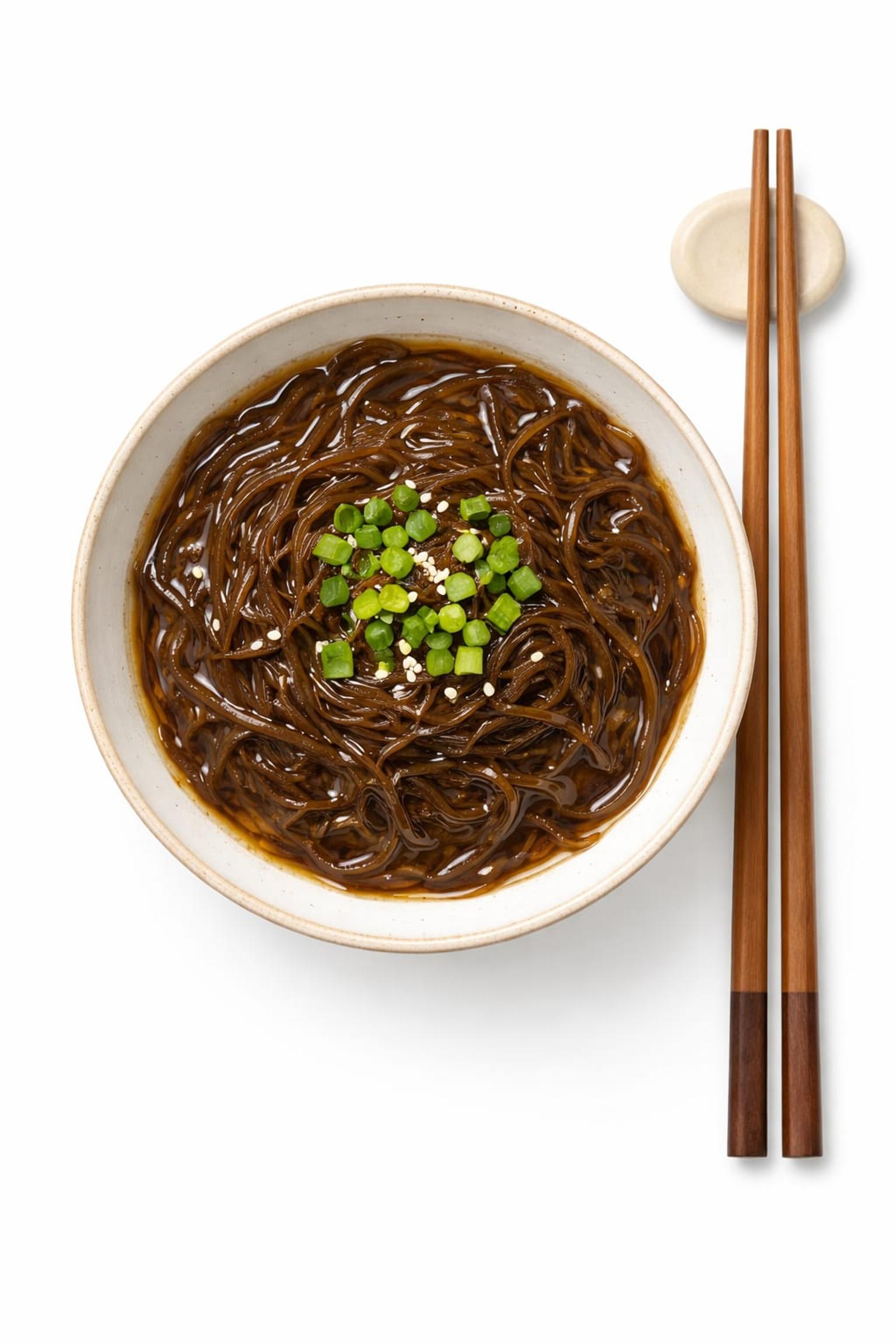
Flavor profile: mild, oceanic, slightly mineral, with a gentle brine. When dressed in rice vinegar, there is a clean acidity that balances the mucilaginous texture. Mozuku is almost always eaten in its hydrated state and functions as a vegetable side dish or soup ingredient.
For the salted form, which is the most common export form, desalting is straightforward: soak in cold water for 5–10 minutes, rinse thoroughly, and drain. Taste before use; if still noticeably salty, repeat once. The desalted mozuku is then ready to dress, add to soup, or use as a base.
Forms Available, Fresh, Salted, Dried, and Extract, and What That Means for Buyers Outside Japan
Four distinct forms of mozuku reach consumers, and they are not equivalent:
Fresh (namazukuri): Available January through April in Okinawa, sold wet with minimal processing. This is mozuku at its best; texture, flavour, and fucoidan content are at their peak. It is not accessible in Europe. Okinawan fresh mozuku does not survive the transit time and regulatory requirements of import to the EU market in a usable form.
Salted: The dominant export form. Mozuku is packed in coarse salt to preserve it; the process extends shelf life substantially while maintaining texture reasonably well after desalting. This is the form most likely to reach European buyers through specialist Japanese food importers. The desalting process (cold water soak, 5–10 minutes) is simple and effective.
Dried: Mozuku is also available in dried form, which rehydrates to approximate the texture of fresh. Dried mozuku is easier to ship and store and has a longer shelf life than salted. Texture after rehydration is slightly more delicate than salted-then-desalted mozuku but adequate for most preparations.
If you want the practical buyer comparison rather than the taxonomy, our fresh vs dried mozuku guide explains what really changes in texture, prep, and storage, and why salted mozuku often matters more than people expect.
Fucoidan extract / supplement: Concentrated fucoidan extracted from C. okamuranus is available in supplement form: capsules, powders, and liquid extracts. This is a categorically different product from whole-food mozuku. The fucoidan is isolated, the dose is standardised, and the research base for this form, while still limited, is generally stronger and more directly applicable than research on whole-food consumption. The two cannot be equated: a supplement delivers purified compound; whole-food mozuku delivers that compound embedded in a complex food matrix alongside iodine, polysaccharides, minerals, and water.
Frequently Asked Questions
What is mozuku seaweed and how is it different from other Japanese seaweeds?
Mozuku refers to two related but distinct species: Cladosiphon okamuranus (futo-mozuku / Okinawan thick mozuku) and Nemacystus decipiens (ito-mozuku / thread mozuku). Both are brown algae in the family Chordariaceae. C. okamuranus is the dominant commercial species and the one associated with high fucoidan content, while N. decipiens remains far smaller in output and evidence base. Mozuku is taxonomically and nutritionally distinct from nori (Pyropia spp., red algae), wakame (Undaria pinnatifida), and konbu (Saccharina japonica): different families, different bioactive compounds, different culinary uses.
Is mozuku seaweed good for you?
Mozuku is very low in calories (approximately 4–6 kcal per 100 g fresh weight), and contains fucoidan at 20–35% of dry weight, among the highest concentrations of any cultivated seaweed. Animal model research (Nagamine et al., Marine Drugs, 2015) demonstrates that C. okamuranus fucoidan is at least partially bioavailable, and population data (Willcox et al., 2009) associates Okinawan seaweed consumption with favorable health markers. However, no randomized controlled trial on whole-food mozuku consumption in humans currently exists. The evidence is promising but not clinically established. Notable consideration: the iodine content (150–400 µg per 100 g) is clinically significant for thyroid patients.
Where can I buy mozuku seaweed in Europe?
Usually through specialist Japanese grocers, import e-commerce, or supplement retailers, depending on the format. Fresh mozuku is the least realistic option in Europe; frozen, seasoned, dried, or salted products are much more plausible. For a Europe-specific breakdown of which formats are actually available and what to verify before you pay, see How to Buy Mozuku in Europe.
What does mozuku taste like and how do you eat it?
Mozuku has a mild, oceanic, slightly mineral flavour with a characteristic mucilaginous texture,slippery and slightly gel-like. The texture is produced by fucoidan and is a feature of the seaweed, not a sign of spoilage or poor handling. The most common preparation in Okinawa is mozuku-su: mozuku dressed with rice vinegar and sometimes ginger, served cold. The vinegar acidity balances the texture effectively. Mozuku also appears in simple soups (mozuku tamago,egg drop soup) and occasionally as tempura. For salted mozuku, desalt by soaking in cold water for 5–10 minutes, rinsing, and draining before use.
Can you eat mozuku seaweed if you have a thyroid condition?
Mozuku contains approximately 150–400 µg of iodine per 100 g fresh weight. The EU adequate intake for iodine in adults is 150 µg per day; the tolerable upper intake level is 600 µg per day. A single serving of mozuku can meet the full adequate daily intake and may push toward or exceed the upper level depending on portion size. For individuals with thyroid conditions, those taking thyroid medication, or those on iodine-restricted diets, this is clinically relevant. There is no blanket prohibition on mozuku for thyroid patients, but the iodine content must be factored into total dietary iodine management. Consult a healthcare provider for guidance specific to your situation.
The Short Version,What You Need to Know About Mozuku Seaweed
If you read nothing else, here is what the evidence actually supports:
- In product language, mozuku usually points to Cladosiphon okamuranus, but the name also covers Nemacystus decipiens in Japanese and Okinawan usage.
- "Mozuku" covers two distinct species: futo-mozuku (C. okamuranus) and ito-mozuku (N. decipiens), they are not interchangeable and their fucoidan structures differ.
- C. okamuranus contains 20–35% fucoidan by dry weight, among the highest of any commercially cultivated seaweed. The slippery texture is this compound.
- No human randomized controlled trial on whole-food mozuku exists. Bioavailability evidence is from animal models (Nagamine et al., Marine Drugs, 2015, PMC4306924). Population correlations exist but do not establish causality.
- Okinawans eat mozuku as a 100-yen convenience store staple. The "rare superfood" framing is a Western export-market construction.
- Mozuku farm infrastructure provides substrate for juvenile coral polyp settlement, a documented reef-restoration co-benefit, not a marketing claim.
- Iodine content (150–400 µg per 100 g fresh) is clinically relevant for thyroid patients and those on anticoagulant medication.
This content is for informational purposes only and does not constitute medical advice. Consult a healthcare professional before making dietary changes, particularly if you have a thyroid condition, are taking thyroid medication, or are on anticoagulant therapy.