Novel Food Article 14: Traditional Food Route Explained
How EU Novel Food Article 14 works for foods from third countries: eligibility, dossier contents, objections, timelines, and what it means for mozuku.
By Not Nori · · 12 min read
Informational content based on the sources cited in the article. It does not replace medical advice.

On this page
- What Article 14 Actually Covers
- 1. Article 14 is for a specific food, not for a vague cultural story
- 2. Article 14 is built around primary-production foods
- What Has to Go Into an Article 14 Notification
- What "history of safe use" really means in practice
- How the Procedure Actually Works
- Why "4 Months" Is True in Law but Misleading in Real Life
- Official examples show the gap between stopwatch and calendar
- What Happens If Safety Objections Are Raised
- One Strategic Detail Many Operators Miss: No Data Protection
- What Article 14 Means for Whole Mozuku
- Frequently Asked Questions
- Is Article 14 an automatic fast track for any traditional food?
- Does 25 years of use in Japan automatically authorise mozuku in the EU?
- Is the four-month period the full Article 14 timeline?
- Can a company get data protection under Article 14?
- Is Article 14 the right route for fucoidan extract from mozuku?
- The Short Version
- Sources
Article 14 is not a loophole around EU Novel Food law. It is the part of EU Novel Food law designed for traditional foods from outside the Union.
That distinction matters because many operators, and many buyers, compress Article 14 into a misleading one-liner: "25 years of traditional use and you are in." That is not how the procedure actually works. There is a legal definition, a notification dossier, a validity check, a four-month objection window, and, if objections are raised, a second route with EFSA and a formal authorisation step.
This guide explains what Article 14 really covers, what must go into the file, why the famous "four months" is only part of the story, and what all of this means for whole mozuku from Okinawa.
For the broader Novel Food picture, see Novel Food and Seaweed in the EU: What the 2025 Rules Mean. For the wider buying framework, our pillar guide on seaweed supplements in Europe and safety rules covers the compliance stack beyond Novel Food alone.
What Article 14 Actually Covers
Under Regulation (EU) 2015/2283, a "traditional food from a third country" is a novel food derived from primary production with a history of safe food use in at least one third country. The same Regulation defines that history of safe food use as at least 25 years of continued use in the customary diet of a significant number of people, supported by compositional data and experience of use.
Two important limits sit inside that definition.
1. Article 14 is for a specific food, not for a vague cultural story
The notified food has to be identified clearly. The safety history must match the food actually being notified, not a looser category around it.
That means "Japan has eaten seaweed for centuries" is not enough for whole mozuku, and whole mozuku use is not automatically the same thing as long-term customary use of a purified fucoidan extract. The legal question is always: what exact food is being placed on the Union market?
2. Article 14 is built around primary-production foods
The Regulation states that traditional food from a third country must be derived from primary production, and recital 16 adds an important clarification: such foods may be processed or unprocessed, as long as they are derived from primary production.
For mozuku, that is a useful distinction. Whole, salted, or dried mozuku can plausibly fit the logic of Article 14 more naturally than a highly isolated functional ingredient. That is an inference from the legal structure, but it is the right one to keep in mind.
What Has to Go Into an Article 14 Notification
Article 14 itself already sets the core file requirements. The notification must include:
- the name and address of the applicant,
- the name and description of the traditional food,
- the detailed composition of the traditional food,
- the country or countries of origin,
- documented data demonstrating the history of safe food use in a third country,
- proposed conditions of use and any specific labelling requirements, or a verifiable justification if those are not needed.
Commission Implementing Regulation (EU) 2017/2468 adds the file architecture around that core. A notification must contain a cover letter, a technical dossier, and a summary of the dossier. The dossier must include administrative data, scientific data, a description of how the data were gathered, a justified safety evaluation strategy, and a proposed overall safety conclusion for the intended uses.
That is the first reason Article 14 is often misunderstood. It is not a casual notification. It is a structured regulatory dossier.
What "history of safe use" really means in practice
The law gives the standard, but not a magic checklist of documents. In practice, applicants have to assemble enough reliable material to show that the food in question has actually been eaten as food, in customary use, for the required time period and at meaningful scale.
This is partly an inference from the legal text and public notification summaries, but it is a strong one. The file usually has to work on several levels at once:
- identity and composition of the food,
- evidence of customary consumption,
- context of use in the source country,
- intended EU uses and exposure,
- and a safety argument that survives scrutiny if a Member State or EFSA raises concerns.
If any of those layers is weak, the "25 years" talking point will not save the file.
How the Procedure Actually Works
Article 14 is easier to understand as a decision tree.
| Step | Legal clock | What actually happens |
|---|---|---|
| Notification submitted | No fixed full-process clock yet | The applicant files the Article 14 dossier with the Commission |
| Validity check | Commission verifies validity first | The Commission checks scope, completeness, and may ask for more information |
| Forwarding of valid file | Within 1 month after validity is verified | The Commission sends the valid notification to Member States and EFSA |
| Safety-objection window | 4 months | Member States or EFSA may submit duly reasoned safety objections |
| No objections | Commission acts without delay | The Commission authorises the food and updates the Union list |
| Objections raised | Article 15(5) blocks authorisation on the notification route | The applicant may move to an Article 16 application |
| Article 16 application | EFSA 6 months for its opinion, extendable if more data are requested | The route becomes closer to a standard scientific review |
| Final authorisation after Article 16 | Commission has 3 months after EFSA opinion to draft the implementing act | The food is authorised only if the Commission adopts the act and updates the Union list |
This is the point most summaries miss: the famous four months are only the objection period after a notification has already been considered valid and forwarded.
Why "4 Months" Is True in Law but Misleading in Real Life
On paper, Article 15 gives the market the impression of a fast lane. In practice, the calendar is longer.
The Commission's own authorisations page now spells this out more clearly than many legal summaries do: traditional foods from third countries can only be placed on the EU market after the Commission has processed the notification, adopted an implementing act authorising the placing on the market, and updated the Union list.
That means the real-world timeline depends on more than the four-month objection window:
- how quickly the file is considered valid,
- whether the Commission asks for additional information during validity review,
- how fast the implementing act moves after the objection period,
- and whether the file gets pushed into Article 16 after objections.
Official examples show the gap between stopwatch and calendar
The EU's own implementing regulations make this visible.
Fonio: the notification was submitted on 23 January 2018, forwarded as valid on 28 February 2018, and authorised in December 2018. That is a relatively smooth Article 14 file, but it is still far longer than four months on the calendar.
Cocoa pulp: notifications were submitted in January and March 2019, the Commission requested additional information on validity, the valid notifications were then forwarded in May and June 2019, and the authorisation arrived in February 2020. Again, this is faster than a full standard Novel Food route, but not a literal four-month end-to-end process.
The right mental model is this: Article 14 can be faster than the standard Article 10 to 12 route, but it is not instant and it is not automatic.
What Happens If Safety Objections Are Raised
This is where Article 14 stops being a "notification story" and becomes a more classical risk-assessment story.
If a Member State or EFSA submits a duly reasoned safety objection within the Article 15 window, the Commission cannot authorise the food on the notification route. The applicant may then submit an Article 16 application. Under Article 17, EFSA has six months to adopt its opinion on that application, subject to extension if additional information is requested. Under Article 18, the Commission then has three months from publication of EFSA's opinion to submit a draft implementing act.
So Article 14 is not a separate universe from the rest of Novel Food law. It is a front-end filter:
- no objections: faster route,
- objections: deeper scientific route.
That design is deliberate. It gives a simpler path to foods with a convincing customary-use history, while preserving a full safety review when credible objections exist.
One Strategic Detail Many Operators Miss: No Data Protection
The Commission's 2018 Q&A on the new Novel Food Regulation states that data protection is not applicable to notifications or applications to place traditional foods on the EU market.
That does not make Article 14 unattractive. But it does change the business logic.
This is an inference from the Commission's Q&A rather than an explicit market-strategy statement, but the implication is straightforward: Article 14 is less attractive to operators who want strong proprietary exclusivity around the regulatory file itself. It is more attractive where the commercial moat sits elsewhere, in sourcing, traceability, formulation, brand, distribution, or first-mover advantage.
For a product like mozuku, that matters. Even if the regulatory route is viable, the commercial upside depends on more than the legal pathway alone.
What Article 14 Means for Whole Mozuku
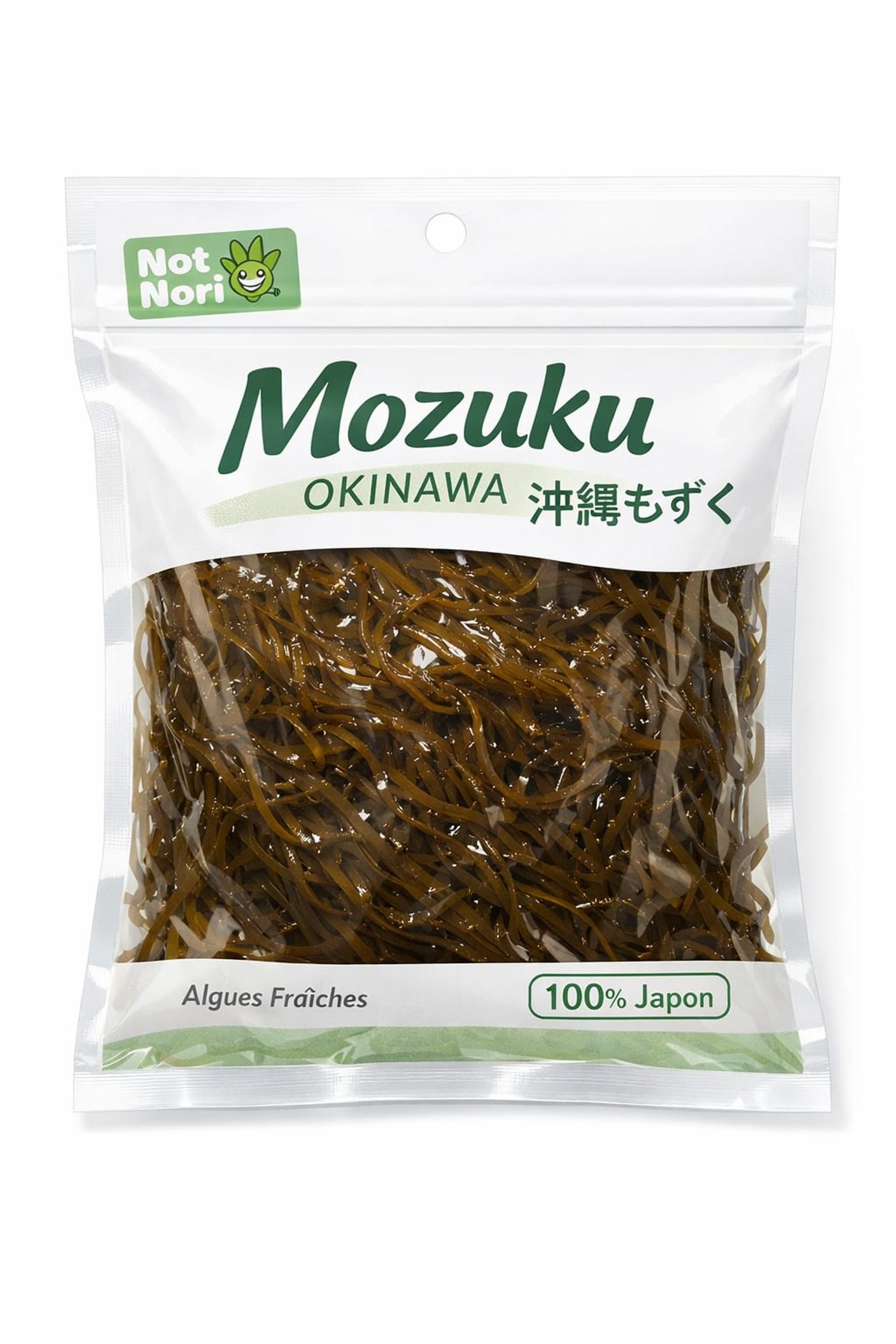
For whole mozuku, Article 14 is still the most plausible regulatory route on paper.
Why:
- mozuku is a primary-production seaweed,
- Okinawa provides a long and well-documented customary consumption context,
- the route was built for foods with safe use outside the EU,
- and the definition does not require the food to be unprocessed, only derived from primary production.
But a plausible route is not the same thing as a live file.
Based on the European Commission's public summary pages, we found an application for fucoidan extract from Cladosiphon okamuranus from H. Holstein GmbH, but we did not find a public Article 14 notification for whole mozuku. That is an inference from the Commission's published summaries as reviewed on 6 April 2026.
That is the operational gap for mozuku today. The logic of Article 14 fits. The public regulatory history, at least from the sources we reviewed, does not yet show that someone has completed that route for whole mozuku.
For origin-proof questions beyond Novel Food status, see Mozuku Traceability: How to Verify Okinawa Origin.
Frequently Asked Questions
Is Article 14 an automatic fast track for any traditional food?
No. It is a defined procedure with eligibility rules, a dossier, a validity check, a four-month objection window, and, if objections are raised, a second-stage application process.
Does 25 years of use in Japan automatically authorise mozuku in the EU?
No. The 25-year safe-use history is one legal condition. It still has to be documented in a valid dossier, notified to the Commission, and pass the EU procedure.
Is the four-month period the full Article 14 timeline?
No. It is only the objection period after the Commission has verified the notification as valid and forwarded it. Real calendar time is longer.
Can a company get data protection under Article 14?
No, according to the Commission's 2018 Q&A, data protection does not apply to traditional food notifications or applications.
Is Article 14 the right route for fucoidan extract from mozuku?
Not obviously. The route is much more naturally aligned with foods whose customary diet history can be documented as the notified food itself. For a purified extract, that fit is much harder to establish. This is an inference from the legal framework and the current public filing pattern.
The Short Version
- Article 14 is the EU Novel Food route for traditional foods from third countries, not a loophole outside Novel Food law
- The food must be derived from primary production and have at least 25 years of safe customary use in at least one third country
- A valid Article 14 file still needs identity, composition, origin, safe-use history, intended uses, and a structured technical dossier
- The famous four months are only the objection period after validity review, not the full real-world timeline
- If safety objections are raised, the file moves into the deeper Article 16 and EFSA route
- Whole mozuku looks like a plausible Article 14 candidate on paper, but we did not find a public whole-mozuku Article 14 notification in the Commission sources we reviewed
Sources
- Regulation (EU) 2015/2283 on novel foods
- Commission authorisations page for traditional foods from third countries
- Commission Implementing Regulation (EU) 2017/2468
- European Commission Q&A on the new Novel Food Regulation
- Commission summaries of applications and notifications
- Commission Implementing Regulation (EU) 2018/2016 on fonio
- Commission Implementing Regulation (EU) 2020/206 on cocoa pulp
This content is for informational purposes only. It does not constitute legal advice. For product-specific regulatory questions, consult a qualified food-law specialist.