Fucoidan Health Benefits: What the Research Shows
A review of human trials and broader research on fucoidan, organized by level of evidence rather than marketing claims.
By Not Nori · · 13 min read
Informational content based on the sources cited in the article. It does not replace medical advice.
On this page
- Fucoidan is not one molecule, and species source determines everything
- Where fucoidan comes from: 99% of the world's mozuku grows in one place
- The bioavailability paradox: high-MW fucoidan is more bioactive but barely absorbed
- What the science actually shows, organized by level of evidence
- Strongly supported by human RCTs
- Emerging evidence: meta-analyses and small pilots
- Preclinical only: in vitro and animal models
- The prebiotic mechanism: fucoidan's best-supported human pathway in 2025
- Frequently asked questions
- What fucoidan is, and what it is not yet
Fucoidan is one of the most studied compounds in marine biology, with research dating back to 1913. Yet in 2025, the best-supported human mechanism is not the one most supplement brands lead with. It is not anti-cancer. It is not anti-viral. The most robustly demonstrated pathway in human clinical data is prebiotic: fucoidan reaches the colon largely unabsorbed and is fermented by gut bacteria into short-chain fatty acids.
This article is organized by level of evidence, not by a list of promised benefits. That distinction matters, because the gap between what in-vitro studies suggest and what human randomized controlled trials have actually demonstrated is large enough to change what you reasonably expect from fucoidan.
Fucoidan is not one molecule, and species source determines everything
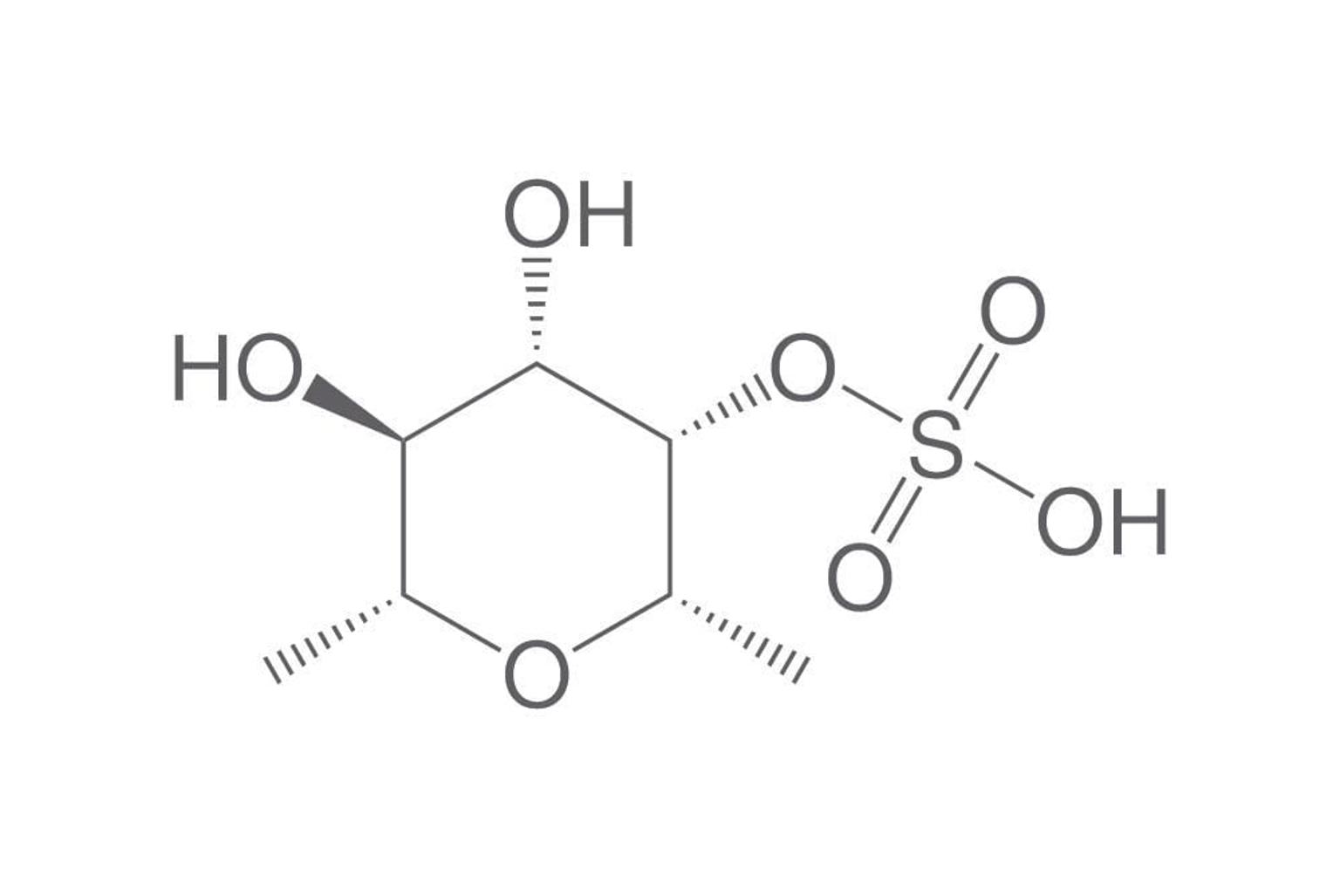
The word "fucoidan" describes a family of sulfated polysaccharides, not a single compound. Structural variation across species is substantial enough that findings from one source cannot be assumed to transfer to another without direct evidence.
Fucoidan from Cladosiphon okamuranus (the species that makes up virtually all Okinawan mozuku) contains more than 95% fucose and has a molecular weight in the 500 to 800 kDa range. Fucoidan from Fucus vesiculosus (bladderwrack, common in European supplements) has a different backbone linkage pattern and sulfation profile. Undaria pinnatifida (wakame) produces fucoidan with a different monosaccharide composition again.
These are not superficial differences. When you see a study cited in a product description, the first question to ask is: which species was used? If the answer is not the same species you are consuming, the result may not transfer. This point is developed further in the complete fucoidan guide, which covers structural diversity in detail.
Where fucoidan comes from: 99% of the world's mozuku grows in one place
Okinawa Prefecture accounts for 99% of global mozuku production, with a recorded harvest of 19,278 tonnes in 2021. Mozuku alone represents approximately 50% of the total aquaculture value of the prefecture. Within Okinawa, the city of Uruma (Katsuren area) produces roughly 40% of the prefectural total.
The Cladosiphon okamuranus strain used in commercial cultivation today traces its origin to a specific registered event: in 2011, a fisherman named Munekazu Mekaru, working with the Onna Village Fisheries Cooperative, registered the Onna-1 strain with Japan's Ministry of Agriculture, Forestry and Fisheries, making it the first brown seaweed registered in the national cultivar database. The cooperative has since documented an empirical relationship between coral reef health and mozuku yield, with coral restoration maintained as part of their aquaculture practice.
This geographic concentration matters for fucoidan research. A 2018 study published in Marine Drugs (Ikeguchi et al., n=396, PMC6117716) measured urinary fucoidan excretion across a large Japanese population sample and found that 97% of participants showed detectable fucoidan absorption. Residents of Okinawa had significantly higher fucoidan excretion than those from other prefectures (332 ± 358 vs 240 ± 302 µg/gCr, p less than 0.01), with 14 of the 16 highest-absorbing individuals living in Okinawa. The researchers proposed that long-term, high-frequency mozuku consumption may have selected for gut microbiota adapted to fucoidan fermentation, an idea that connects directly to the prebiotic mechanism discussed later in this article.
For more on the Okinawan food tradition and how mozuku fits within it, see the Okinawa diet and longevity guide.
The bioavailability paradox: high-MW fucoidan is more bioactive but barely absorbed
One of the most underreported complications in fucoidan science is the inverse relationship between molecular weight, bioactivity, and absorption.
High-molecular-weight fucoidan (HMW, above 400 kDa) consistently shows stronger biological activity in laboratory settings: better immune cell stimulation, stronger selectin-binding, more potent antiviral effects. But HMW fucoidan is poorly absorbed through the intestinal epithelium when taken orally. Low-molecular-weight fucoidan (LMW, typically produced by enzymatic or chemical degradation) reaches systemic circulation more readily, but shows reduced activity in the same assays.
This paradox remained unresolved as of 2025. Its practical implication is significant: for whole-food mozuku consumption and for most oral fucoidan supplements, a large fraction of the ingested compound never enters the bloodstream. It reaches the colon intact, where the gut microbiota take over. This means many of the effects observed in human trials may be mediated by colonic fermentation rather than by fucoidan itself acting systemically. Which brings us to the evidence.
What the science actually shows, organized by level of evidence
The studies below are grouped by what the evidence can and cannot support in human populations.
Strongly supported by human RCTs
The following findings come from randomized controlled trials in human participants.
Immune response to vaccination: A 2013 randomized controlled trial published in the Journal of Nutrition (Negishi et al., n=70 older Japanese adults, DOI: 10.3945/jn.113.179036) tested mekabu fucoidan at 300 mg per day for four weeks before influenza vaccination. Antibody titers against all three vaccine strains were significantly higher in the fucoidan group than in the placebo group. The population was older adults, and mekabu (Undaria pinnatifida sporophyll) is a different species from Okinawan mozuku; the mechanism may be relevant but the species difference warrants caution in direct extrapolation.
Gut microbiome and inflammation: A 2024 randomized controlled trial published in the International Journal of Biological Macromolecules (Liu et al., n=70 adults with prediabetes, DOI: 10.1016/j.ijbiomac.2024.138415) tested fucoidan at 1,000 mg per day for 12 weeks. Compared to placebo, the fucoidan group showed significant reductions in TNF-alpha, IL-6, and serum lipopolysaccharide. Gut microbiome sequencing showed enrichment of Megamonas and Blautia (both short-chain fatty acid producers) and reduction of Klebsiella. This is currently the most direct human evidence for fucoidan's prebiotic mechanism.
Body composition with resistance training: A 2025 randomized controlled trial published in Scientific Reports (Cousins et al., n=20, DOI: 10.1038/s41598-025-24066-9) tested 1 g per day of fucoidan over six weeks alongside resistance training. The fucoidan group showed significantly greater increases in lean body mass, decreases in body fat percentage, and increases in peak anaerobic power compared to the control group. Sample size is small and replication is needed.
Emerging evidence: meta-analyses and small pilots
These findings are directionally interesting but carry caveats that matter.
Body weight and lipids: A 2025 systematic review and meta-analysis published in Nutrition Reviews (Lagowska et al., DOI: 10.1093/nutrit/nuae042, 29 RCTs, n=1,583) found that consumption of brown seaweed for eight or more weeks was associated with a reduction of 0.40 kg/m2 in BMI, a reduction of 7.33 mg/dL in LDL cholesterol, and a reduction of 1.48 percentage points in body fat. A parallel meta-analysis in the Journal of Human Nutrition and Dietetics (Casas-Agustench et al., DOI: 10.1111/jhn.70095, same dataset) reported systolic blood pressure reductions of 2.05 mmHg and diastolic reductions of 1.87 mmHg.
The critical caveat: both analyses pooled results across multiple brown seaweed species including Fucus, Undaria, and Cladosiphon, and across whole-food and extract interventions. These are not fucoidan-specific findings. The effects may come from alginate, iodine, fucoxanthin, or other compounds. They cannot be attributed to fucoidan alone.
Salivary immunity and exercise: A 2024 study in the Journal of Sports Science (Cox et al., DOI: 10.1080/02640414.2024.2305007, n=12) found salivary IgA approximately 2.7 times higher post-exercise with fucoidan versus placebo. The sample is very small and the study requires replication before drawing conclusions.
Respiratory function in asthma: A 2022 randomized controlled trial in Scientific Reports (Yeh et al., DOI: 10.1038/s41598-022-21527-3, n=20 adults with mild asthma) found significantly improved FEV1/FVC ratio and reduced IL-8 levels with fucoidan supplementation. The sample is small and the population is specific; findings should not be generalized to healthy adults.
| Finding | Study type | Sample | Species used | Status |
|---|---|---|---|---|
| NK cell elevation | RCT, double-blind | n=40 | Cladosiphon okamuranus | Strongest species-specific human evidence |
| Vaccine antibody response | RCT | n=70 | Undaria (mekabu) | Replicated, different species |
| Gut microbiome shift, inflammation | RCT | n=70 | Not specified | Strong mechanistic support |
| Body composition | RCT | n=20 | Not specified | Promising, needs replication |
| LDL, BMI, blood pressure | Meta-analysis | n=1,583 | Mixed brown seaweed | Cannot be attributed to fucoidan specifically |
Preclinical only: in vitro and animal models
Anti-inflammatory (animal models): A 2024 meta-analysis published in Marine Drugs (Huerta et al., DOI: 10.3390/md22070290) reviewed preclinical studies and found fucoidan reduced neutrophil infiltration by 70 to 90% in animal inflammation models. These findings are mechanistically valuable but cannot be directly applied to humans.
Neuroprotection: A 2024 review in the International Journal of Biological Macromolecules (Yang et al., DOI: 10.1016/j.ijbiomac.2024.134397) synthesized 39 studies on fucoidan, neuroprotection, and blood-brain barrier integrity. The evidence base is entirely preclinical.
The prebiotic mechanism: fucoidan's best-supported human pathway in 2025
Taken together, the Liu et al. 2024 RCT and the Ikeguchi et al. 2018 population study point toward a coherent picture that most fucoidan marketing has not yet reached.
Fucoidan from mozuku, taken orally, arrives in the colon largely intact. The gut microbiota ferment it into short-chain fatty acids and, in doing so, change the microbial community: Blautia and Megamonas (butyrate and propionate producers associated with reduced systemic inflammation) increase; opportunistic gram-negative bacteria like Klebsiella decrease. The downstream effect observed in the Liu trial, lower TNF-alpha, lower IL-6, lower circulating lipopolysaccharide, is consistent with reduced intestinal permeability driven by a healthier microbial environment.
The Ikeguchi data suggest that Okinawans who have eaten mozuku across generations may have developed gut microbiota that ferment fucoidan more efficiently than populations without that dietary history. If accurate, this would mean that the full benefit of mozuku fucoidan accumulates gradually, not acutely, and that the fucoidan-adapted microbiome may be part of what makes Okinawan dietary patterns distinctive. The Ryukyuan concept of nuchi gusui, which translates roughly as "may food be your medicine," describes an empirical relationship between diet and health that predates the science by centuries.
This prebiotic framing is also consistent with the bioavailability paradox: if high-MW fucoidan is poorly absorbed but highly bioactive in vitro, the discrepancy makes sense if most of its human action happens in the colon, not the bloodstream. For more on how mozuku compares to other seaweeds as a whole food, see mozuku vs wakame and mozuku vs nori.
Frequently asked questions
Is fucoidan actually absorbed when you take it orally?
Partially. A 2018 study measuring urinary fucoidan across n=396 Japanese adults found detectable absorption in 97% of participants. However, the absorbed fraction represents a small portion of ingested fucoidan, particularly for high-molecular-weight forms. Most of the compound reaches the colon intact, where it acts as a prebiotic substrate rather than a systemically absorbed bioactive.
What is the difference between mozuku fucoidan and other fucoidan supplements?
Cladosiphon okamuranus fucoidan has a distinct structural profile: more than 95% fucose content and molecular weight in the 500 to 800 kDa range. This differs from fucoidan sourced from Fucus vesiculosus (bladderwrack) or Undaria pinnatifida (wakame), which have different backbone linkages and sulfation patterns. Research on one species is not automatically applicable to another. The only double-blind RCT conducted specifically on Cladosiphon okamuranus fucoidan to date is Tomori et al. 2021.
Is fucoidan proven to fight cancer?
No. As of 2025, there are no robust randomized controlled trials demonstrating anti-cancer effects of fucoidan in humans. The existing evidence is derived almost entirely from in vitro cell culture experiments and rodent models. In vitro cytotoxicity against cancer cell lines does not constitute clinical evidence. Anyone claiming fucoidan "cures" or "prevents" cancer is overstating what the science supports.
How much fucoidan is in whole mozuku versus supplements?
Dried mozuku contains approximately 4 to 6% fucoidan by dry weight, though processing, storage, and cultivar affect this figure. Typical supplement doses in published RCTs range from 300 mg to 3,000 mg of fucoidan per day. Whole mozuku consumed as food delivers fucoidan alongside the full complement of the seaweed's fiber, minerals, and bioactive compounds in their native matrix. For a detailed discussion of dosing, see the fucoidan dosage guide.
Are there interactions or precautions with fucoidan?
Fucoidan has anticoagulant properties in laboratory models, and caution is warranted for individuals taking blood-thinning medications such as warfarin or aspirin. The evidence for clinically meaningful anticoagulant effects at food doses is limited, but the interaction cannot be ruled out at supplement doses. Fucoidan supplements sold in the European Union are subject to the Novel Food Regulation; for guidance on navigating the supplement market safely, see buying seaweed supplements safely in Europe. As with any supplement, consult a healthcare professional if you have a medical condition or take prescription medication.
What fucoidan is, and what it is not yet
What the evidence supports in humans:
- NK cell activity elevation at 3 g per day for 12 weeks (Cladosiphon okamuranus specifically, single RCT)
- Enhanced antibody response to influenza vaccination at 300 mg per day (Undaria fucoidan, replicated)
- Gut microbiome modulation with downstream reduction in systemic inflammatory markers at 1,000 mg per day
- Directional improvements in body composition alongside resistance training (very small sample)
What needs more human data before conclusions can be drawn:
- Direct anti-cancer effects in humans
- Cardiovascular effects attributable to fucoidan specifically (vs. other seaweed compounds)
- Optimal dose and duration for prebiotic effects
- Whether findings from one species transfer to another
What makes mozuku fucoidan structurally distinct:
- Source: 99% of global mozuku production from Okinawa, Japan
- Species: Cladosiphon okamuranus, more than 95% fucose, 500 to 800 kDa molecular weight
- The only published species-specific RCT (Tomori et al. 2021) used fucoidan from this exact species
- Population data suggesting generationally adapted gut microbiota in frequent mozuku consumers
Key fact: In the only randomized, double-blind, placebo-controlled trial testing fucoidan specifically from Cladosiphon okamuranus, NK cell activity was significantly elevated at week 8 at a dose of 3 g per day. Tomori et al. 2021, Marine Drugs, DOI: 10.3390/md19060340
This content is for informational purposes only and does not constitute medical advice. Consult a healthcare professional before making dietary changes.