
Recipes · Easy · Prep 5 mins
Mozuku with Ponzu: The Okinawan Way to Eat Seaweed Daily
A simple 5-minute mozuku with ponzu recipe inspired by Okinawa, with instructions for salted, fresh or ready-to-eat mozuku.
By Not Nori · · 5 min read
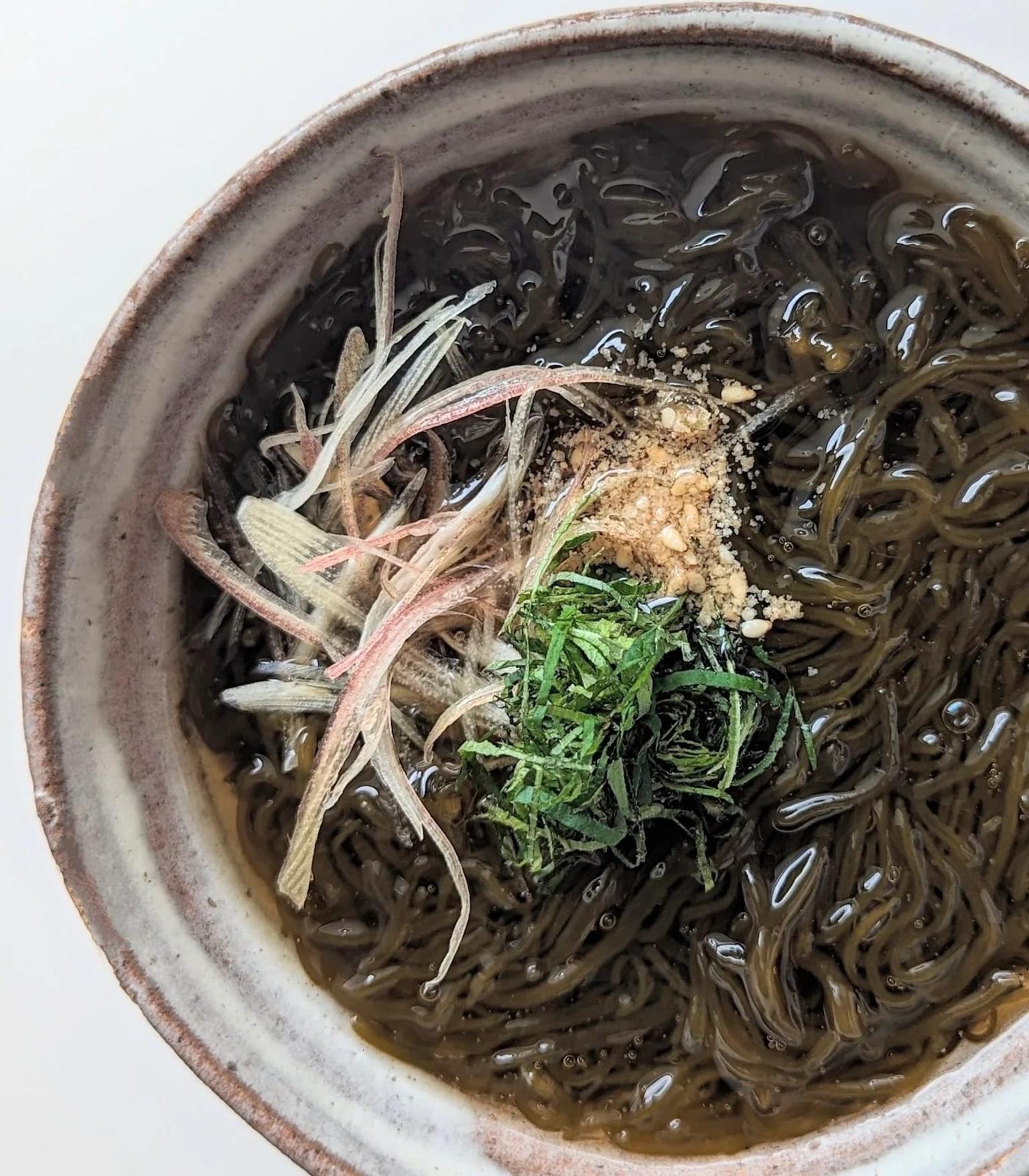
The dish you are about to make has a name in Okinawa: mozuku-su (もずく酢). Literally "mozuku vinegar." It is eaten at breakfast as part of a traditional set meal, served alongside rice and miso soup. It appears in Okinawan school cafeteria lunches. It is not a wellness trend, it is what people on the island have eaten since at least the Meiji era, in a bowl, before the day starts.
Ponzu is essentially a faster path to the same result. Instead of making the classic dashi-soy-vinegar dressing from scratch, ponzu bundles citrus, salt, and acid in one bottle. The mozuku stays the main ingredient. The whole thing takes five minutes.
Ingredients
For 2 small servings:
- 200 g mozuku (fresh, salted, or ready-to-eat pack)
- 2 tablespoons ponzu (citrus ponzu or standard)
- 1 teaspoon rice vinegar, optional (if you want more acidity)
- 5 cm cucumber, thinly sliced into half-rounds
- 1 teaspoon toasted sesame seeds
- 2 cm fresh ginger, grated (optional but recommended)
- 1 small scallion, finely sliced
Quick ponzu substitute: 1 tablespoon soy sauce + 1 tablespoon rice vinegar + 1 teaspoon yuzu or lemon juice.
Method
If using salted mozuku:
- Rinse under cold water for 30 seconds.
- Soak in a bowl of cold water for 2 to 3 minutes.
- Taste: it should be pleasantly salty, not sharp. If still too salty, soak another minute.
- Drain well and gently press out excess water.
If using ready-to-eat or fresh mozuku:
- Drain any liquid from the pack.
- Rinse briefly under cold water if desired.
To assemble:
- Place drained mozuku in a bowl.
- Add ponzu and grated ginger, plus the optional rice vinegar.
- Toss gently with chopsticks, the goal is to coat the strands without breaking them.
- Add cucumber and scallion.
- Finish with sesame seeds.
- Serve immediately or refrigerate for up to 30 minutes. Do not dress more than an hour in advance.
Why Acid Works Here
The acid in ponzu does two things: it lifts the mild, oceanic flavor of the mozuku and preserves the texture by keeping the fucoïdan layer stable. This is why traditional mozuku-su uses vinegar rather than oil. A purely oil-dressed mozuku tastes flat and loses structure quickly.
Ginger is not optional in the traditional version. In Okinawan home cooking, fresh ginger is routinely paired with mozuku to cut the marine note without masking it. Start with a small amount and add more to taste.
Variations
Closest to traditional mozuku-su: Replace ponzu with 1 tablespoon soy sauce + 1 tablespoon rice vinegar + 1 tablespoon cold dashi. Add a few drops of mirin if available.
Spicy: Add a pinch of shichimi togarashi or a few drops of chili oil at the end.
With avocado: Lay 2 to 3 thin avocado slices alongside the dressed mozuku. The fat softens the acid and makes the dish more substantial.
In miso soup: Add undressed mozuku directly to miso soup in the final 30 seconds before serving. Do not boil, high heat degrades the texture and fucoïdan content.
How to Serve It
In Okinawa, mozuku-su is most commonly eaten as part of a morning set meal alongside rice, miso soup, and a small protein. It also works as:
- A light starter before sashimi or grilled fish
- A side dish with plain white rice
- A small savory bowl between meals during warmer months
- Part of a Japanese-style bento
FAQ
How long does dressed mozuku keep? Best eaten the same day, within an hour or two of dressing. Undressed mozuku keeps 1 to 2 days refrigerated (salted), or follow the expiry on ready-to-eat packs. Once dressed with ponzu, the strands continue to absorb acid and soften.
Can I use bottled ponzu? Yes. Look for one that lists yuzu, sudachi, or citrus juice in the ingredients. Avoid ponzu-flavored sauces that rely on artificial flavoring, they tend to produce a flat result.
Is mozuku different from other seaweeds for this recipe? The filamentous texture and mild flavor of Cladosiphon okamuranus mozuku make it particularly well-suited to simple acid dressings. Wakame or nori would produce a different dish with a different texture and flavor balance. See Mozuku vs Wakame for a detailed comparison.
How much is a normal serving? A standard portion in Okinawa is 80 to 120 g of fresh or ready-to-eat mozuku. This recipe uses 200 g for two, which is consistent with typical consumption patterns in Okinawan household surveys.
For a complete overview of the ingredient, see What Is Mozuku Seaweed?. For the science behind fucoïdan, see Fucoïdan: The Complete Guide.
This content is for informational purposes only. Consult a healthcare professional if you have specific dietary health conditions.