
Blog · okinawa mozuku · 8 min read · 2026-04-09
Okinawa Mozuku vs Ito-Mozuku: What Actually Changes
If a label says mozuku, species still matters. Compare futo-mozuku and ito-mozuku on texture, evidence, origin, and buyer relevance.
On this page
- The Direct Answer
- What Changes Visually And On The Plate
- Side-By-Side Comparison
- Why The Species Name Matters For Science
- Why The Species Name Matters For Buyers
- Are They Interchangeable In Cooking?
- The Safest Rule Of Thumb
- Frequently Asked Questions
- What is the difference between futo-mozuku and ito-mozuku?
- Is ito-mozuku the same as Okinawa mozuku?
- Is ito-mozuku just a younger or thinner version of futo-mozuku?
- Which one is more common in exports and buyer-facing products?
- Which one has the stronger human fucoidan evidence?
- What should I check first on a mozuku label?
- Short Version
- Sources
- Official and primary sources
If a label says mozuku, that still does not tell you exactly which seaweed you are buying. In Okinawa and Japan, the name covers at least two edible brown seaweeds sold under the mozuku umbrella: Cladosiphon okamuranus, usually called Okinawa mozuku or futo-mozuku, and Nemacystus decipiens, usually called ito-mozuku or hoso-mozuku.
The short version is simple. Okinawa mozuku is the thicker, dominant, research-heavy species. Ito-mozuku is the thinner, more niche species. They are not the same seaweed at different ages, and they do not carry the same texture, market position, or evidence profile.
If you want the broader baseline first, start with What Is Mozuku Seaweed? A Clear Guide. This article stays close to the label, the plate, and the evidence trail: what futo and ito really mean, how they eat differently, and why species naming matters when traceability or fucoidan claims are on the line.
The Direct Answer
Okinawa Prefecture describes two cultivated mozuku types in Okinawa:
Okinawa mozuku(futo-mozuku), the dominant one,mozukualso calledito-mozukuorhoso-mozuku, the thinner one.
That alone already corrects a common Western simplification. That is the wrong map. Both belong to the Okinawa picture, and what changes is commercial weight: a 2020 genomics paper reported roughly 17,000 tons of Cladosiphon okamuranus versus about 800 tons of Nemacystus decipiens in Okinawa in fiscal year 2017.
What Changes Visually And On The Plate
The easiest difference to grasp is physical.
Official Okinawa sources describe futo-mozuku as the thicker, irregularly branched type, with branches roughly 1.5 to 3 mm thick. The Nemacystus decipiens sources describe ito-mozuku or hoso-mozuku as more filamentous, with branches around 1 mm or less.
That is why Japanese everyday language often separates them by mouthfeel as much as by species name:
futo-mozukusuggests more bite, more body, and a more substantial hydrated texture,ito-mozukusuggests a smoother, finer, more delicate mouthfeel.
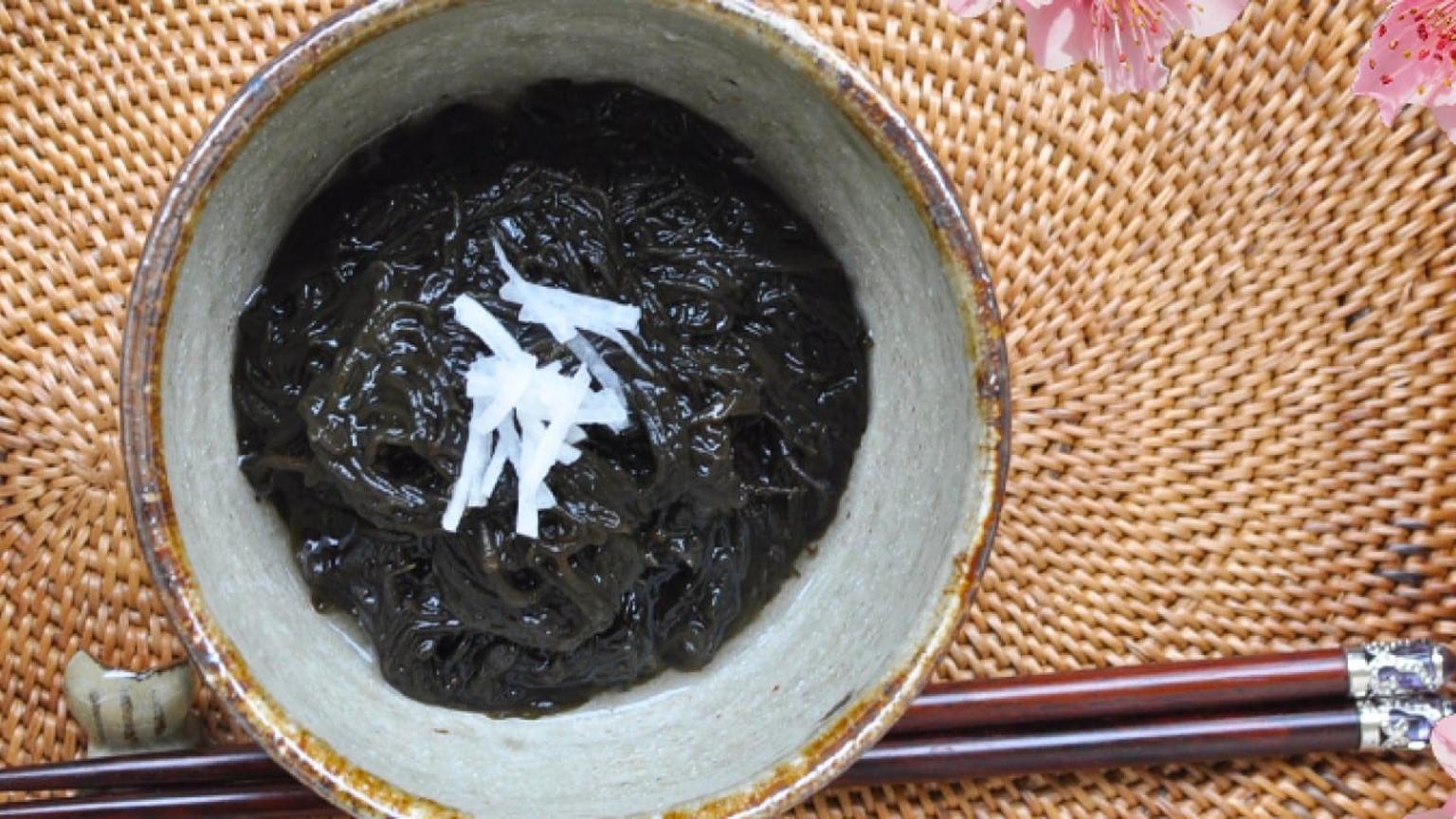
The difference is not just academic. If you are buying mozuku for the first time because you want the classic Okinawan vinegared experience, you are usually imagining the thicker Okinawa mozuku profile, not the finer ito-mozuku one.
Side-By-Side Comparison
| What changes | Okinawa mozuku / futo-mozuku | Ito-mozuku / hoso-mozuku |
|---|---|---|
| Species | Cladosiphon okamuranus | Nemacystus decipiens |
| Usual market signal | Default Okinawa commercial mozuku | Smaller, more niche mozuku lane |
| Branch thickness | Roughly 1.5 to 3 mm | Around 1 mm or less |
| Texture cue | Thicker, more substantial, more bite | Finer, smoother, more delicate |
| Evidence profile | Stronger species-specific fucoidan literature and human data | Chemistry and species work exist, but far less human evidence |
| Label implication | The safest assumption behind Okinawa mozuku | Should be named explicitly if it matters |
Why The Species Name Matters For Science
This is where species stops being a texture choice and becomes an evidence question.
Human fucoidan evidence is much stronger for Cladosiphon okamuranus than for Nemacystus decipiens. In the sources reviewed for this article, C. okamuranus has:
- a 2012 pilot human study in chronic hepatitis C patients using 0.83 g/day for 12 months,
- a 2021 randomized pilot in healthy adults using 3 g/day for 12 weeks, with improved NK-cell activity at week 8 and no observed adverse events.
For N. decipiens, I found chemistry, cultivation, and genomics work, including fucoidan characterization, but not the same level of human intervention evidence in this scan.
That does not make ito-mozuku uninteresting. It does mean you should be careful with lazy phrases like "mozuku fucoidan has been studied in humans" if the product does not identify the species. If you want the broader evidence map, Fucoidan: The Complete Guide and our dosage guide go deeper on what actually attaches to Cladosiphon okamuranus.
Why The Species Name Matters For Buyers
You do not need taxonomy for its own sake. You need the label detail that tells you whether you are buying the Okinawa default or the thinner, niche species.
If the listing says Okinawa mozuku, ask:
- is the species actually Cladosiphon okamuranus,
- is the product really Okinawa-grown,
- and is the texture likely to match the thicker style you probably expect?
If the listing says ito-mozuku or hoso-mozuku, ask:
- whether the thinner mouthfeel is what you want,
- whether the species is named as Nemacystus decipiens,
- and whether the seller is quietly borrowing
Cladosiphonresearch language for a different seaweed.
That last point matters. A lot of mozuku marketing gets blurry exactly where the science gets species-specific.
For the origin question, Mozuku Traceability: From Onna Village to Your Door helps decode what a real Okinawa claim should look like. For buying channels and format choices, How to Buy Mozuku in Europe and Fresh vs Dried Mozuku cover the next layer.
Are They Interchangeable In Cooking?
Not perfectly.
If your goal is simply to eat mozuku, both belong to the same broader food family. But if your goal is to reproduce a specific texture, the answer changes:
futo-mozukuis the safer choice for a thicker, more structured cold side dish,ito-mozukuis the better fit if you want something finer and smoother.
This is one reason Japanese and Okinawan sources keep the names separate. The separate names survive because the texture gap is obvious the moment you eat them.
The Safest Rule Of Thumb
If you care about Okinawa provenance, default culinary expectation, or human fucoidan evidence, Cladosiphon okamuranus is the species you should expect and verify.
If you care about finer texture or are dealing with a more niche local product, Nemacystus decipiens may be exactly the point, but it should be named openly rather than hidden behind the generic word mozuku.
Frequently Asked Questions
What is the difference between futo-mozuku and ito-mozuku?
Futo-mozuku usually refers to Cladosiphon okamuranus, the thicker and dominant Okinawa commercial species. Ito-mozuku refers to Nemacystus decipiens, the thinner and more niche species.
Is ito-mozuku the same as Okinawa mozuku?
Not usually in product language. Both are part of the Okinawa story, but Okinawa mozuku in commerce usually points to the dominant thick species, Cladosiphon okamuranus.
Is ito-mozuku just a younger or thinner version of futo-mozuku?
No. The safer reading from Okinawa producer and prefectural material is that they are different seaweeds, not one species at two ages.
Which one is more common in exports and buyer-facing products?
Cladosiphon okamuranus by a wide margin. It dominates Okinawan commercial output and is the species most buyers are implicitly looking at when they see Okinawa mozuku.
Which one has the stronger human fucoidan evidence?
Cladosiphon okamuranus. In the source set behind this article, it has far more species-specific human evidence than Nemacystus decipiens.
What should I check first on a mozuku label?
The Latin species name. If the page only says mozuku, you still do not know whether it means futo-mozuku or ito-mozuku.
Short Version
Mozukuis not one species, it is an umbrella name that can cover both Cladosiphon okamuranus and Nemacystus decipiensOkinawa mozukuin commerce usually means the thicker dominant species, Cladosiphon okamuranusIto-mozukuorhoso-mozukuusually means the thinner species, Nemacystus decipiens- The texture difference is real, and the evidence profile is not interchangeable
- If a brand leans on fucoidan science, the species name should be explicit
Sources
Official and primary sources
- Okinawa Prefecture, major fishery products
- Okinawa Prefecture, algae reference, revision 3
- Nishitsuji et al. 2019, draft genome of Nemacystus decipiens
- Nishitsuji et al. 2020, comparative genomics of Cladosiphon okamuranus
- Mori et al. 2012, fucoidan from Cladosiphon okamuranus in chronic hepatitis C
- Nagamine et al. 2021, Cladosiphon okamuranus fucoidan and NK-cell activity
- Tako et al. 1999, fucoidan from commercially cultured Nemacystus decipiens
- Igeta Takeuchi, mozuku types and characteristics
This article is for information only. It is not legal or medical advice. If you use seaweed for a specific health goal, verify the species first and assess iodine exposure with a qualified professional.
Continue reading
2026-02-27
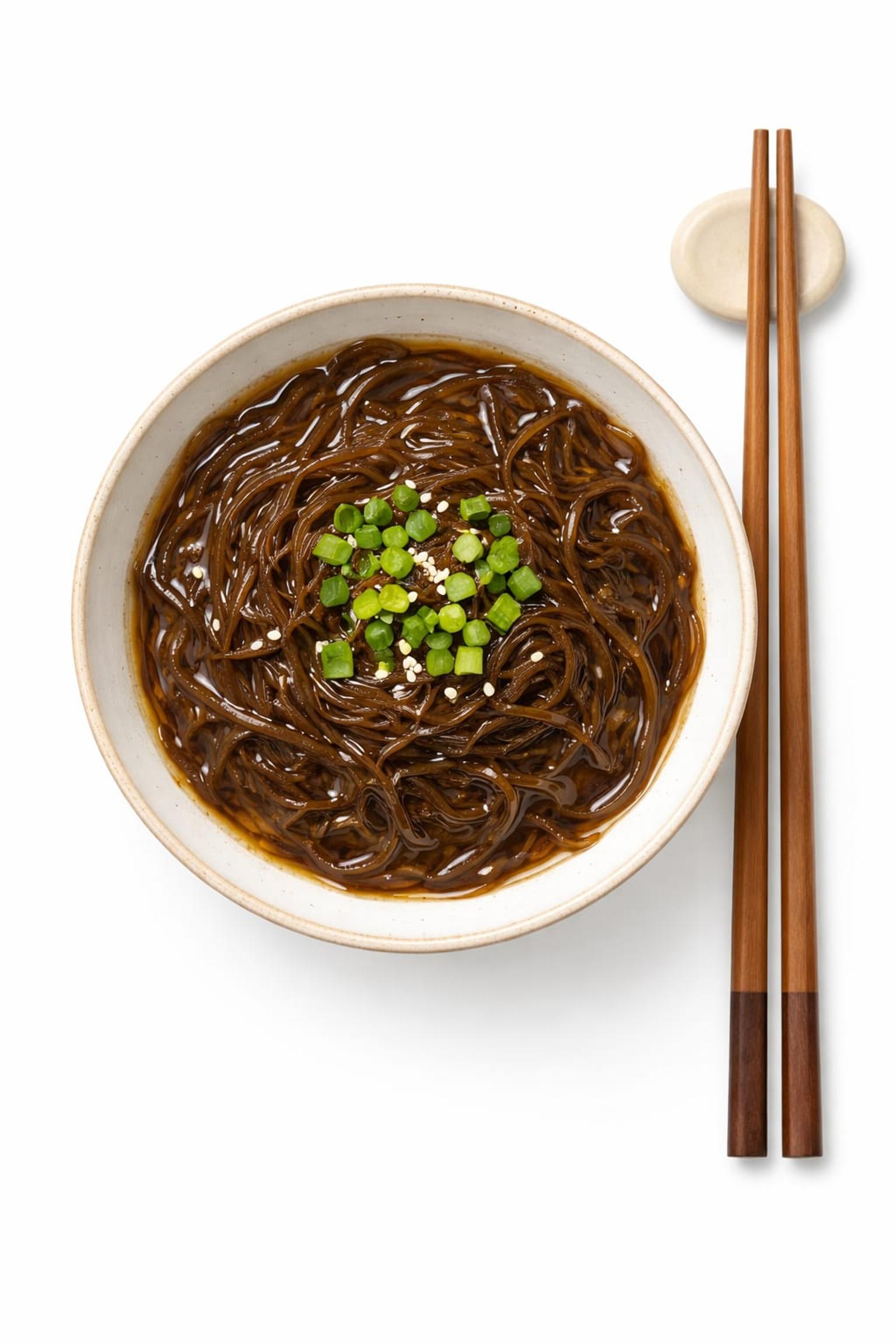
What mozuku is, how it is grown in Okinawa, what makes its texture distinctive and why fucoidan is so often discussed alongside it.

2026-03-07
Compare mozuku and wakame on fucoidan content, iodine exposure, texture, culinary use and the regulatory context in Europe.

2026-03-08
Mozuku and nori come from different seaweed families. Here is why that matters for fucoidan content, iodine and everyday use.